
Lancashire river branded 'worst sewage dumping ground in England' as water company bonuses surge
Last year, the Irwell and the River Darwen, near Blackburn, were described as two of the most polluted rivers in England by Lancashire Wildlife Trust.
Now, Bury Trades Council, which brings together local trade unions on issues affecting people at work, industries and communities, is holding a public meeting about the Irwell and the wider water industry on Thursday, 26 June.


Speakers will include Dr Morag Rose from the Our Irwell group, campaigner Mike Duddy, Hannah Spencer, a Green Party councillor who works as a plumber and stood in the Greater Manchester Mayor election; and Dan Ross of Bury Trades Council.
Organisers say ‘poor’ infrastructure investment to maximise company profits and the use of combined sewage overflows will be among the topics discussed. Combined sewage overflows mix toilet sewage with rainwater, which is emptied into rivers in certain conditions. This harms rivers and coasts and poses threats to humans, they said.
Mr Ross said: “The combined sewer overflow at Sion Street in Radcliffe was responsible for more sewage spills than any other location on the Irwell in 2023. At nearly 2,200 hours, that was the equivalent of three months’ of continuous sewage spills. Data for all British rivers shows the Irwell and its surrounding catchment area was ‘the worst sewage dumping ground in England.”
Nearby, Bolton waste-water treatment works came in second, with 2,145 hours of spills. Rossendale waste-water treatment works was in third with 1,900 hours, according to Environment Agency data in 2023.
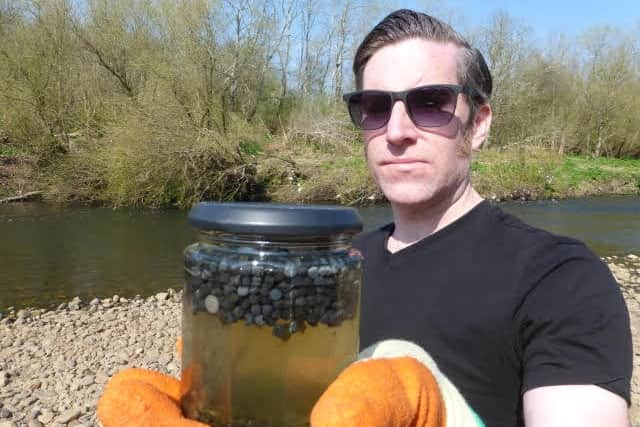
Mr Ross is pictured with a jar of water and ‘bio-beads’ taken from the Irwell. Millions of beads, used to filter contaminants at water treatment plants, are estimated to have escaped into rivers, Bury Trades Council said. Groups such as the Rivers Trust say the public should be able to enjoy rivers without pollution.
Mr Ross added: “Since 1989, the provision of drinking water and disposal of sewage has been in the hands of private water companies like United Utilities. We believe private companies pay mere lip-service to their role in ‘serving’ the public.
“This is because they have diverted money which should have improved our water supply, sewers and rivers into the pockets of their shareholders. In 2023-24, bonus and benefits payments worth more than £1.4million were paid by United Utilities to two executives, on top of £1.1million in basic pay.
“In general, sewage that should have been treated is quietly dumped into rivers, while the monitoring body, the Environment Agency, effectively looks the other way. And water companies’ profits rise. The entire situation is intolerable and completely unnecessary.
“The new Labour government’s Water (Special Measures) Bill slapped a few water industry wrists but it barely addresses the problem. Now, we’re asking the public to sign our petition, calling for water companies to be returned to public ownership.”
Regarding the Irwell catchment area, United Utilities recently said it has invested over £400million between 2020 and 2025 in measures. It was committed to reducing overflow incidents and said 2023 was a very wet year, which contributed to spills. But it shared public’s concerns and has more action planned.
The public meeting is at Prestwich Methodist Church, 405 Bury New Road, on Thursday, June 26 at 7.15pm.