
Lancashire fire brigade develops heavy lift drones to tackle huge wildfires
The Heavy Lift Drone programme aims to improve response times, increase flexibility and reduce risks to firefighters by providing new ways to move equipment and apply water in hard-to-reach areas
Lancashire’s fire brigade is developing a pioneering heavy lift drone capability that could transform how wildfires are tackled across the county.
The innovative project is exploring how a coordinated fleet of heavy lift drones can be used to support firefighters during wildfire incidents by delivering water, equipment and supplies to locations that are difficult to reach on foot.
The project is funded through the Ministry of Housing, Communities and Local Government (MHCLG) and forms part of Lancashire Fire and Rescues Service’s (LFRS) commitment to come up with a hi-tech of dealing with major blazes.
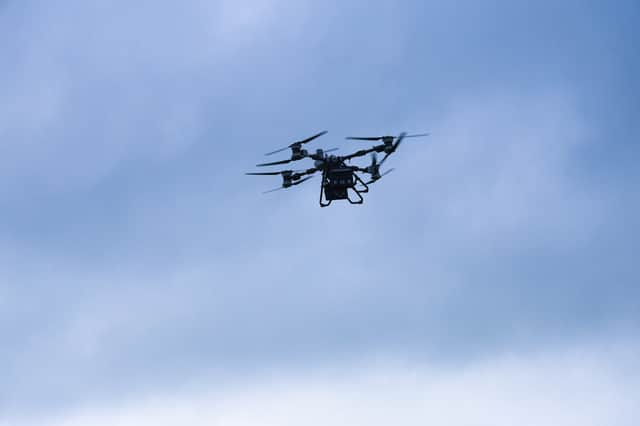

The programme is testing a range of specialist aircraft designed for different operational tasks to assess how effectively they could support wildfire response.
This includes evaluating whether one drone can spray water directly onto a fire from the air, while others carry heavy loads such as equipment, water and essential supplies across challenging terrain.
Testing is also examining how effectively the aircraft can operate as a coordinated team to deliver resources quickly and precisely in support of wildfire firefighting operations.
Wildfires often occur in remote moorland locations where access can be difficult and physically demanding.
The Heavy Lift Drone programme aims to improve response times, increase flexibility and reduce risks to firefighters by providing new ways to move equipment and apply water in hard-to-reach areas.
The project has now progressed to live testing and demonstration phases, with aircraft being trialled and evaluated.
Recent demonstrations have showcased the drones' ability to carry out water spray, water drop and heavy-lift logistics operations.
Project manager Tim Murrell, drone manager at (LFRS), said: "Wildfires are becoming more frequent and more challenging to tackle, particularly in remote areas where firefighters can face difficult terrain and long distances to carry equipment and water.
"The Heavy Lift Drone project is about exploring how technology can help us respond more effectively while improving firefighter safety. These aircraft have the potential to move equipment, deliver water and support crews in ways that simply haven't been possible before.”
Meanwhile, LFRS has welcomed news that technology developed through its long-running collaboration with researchers, drone specialists and wildfire experts has received international recognition in the XPRIZE Wildfire competition.
The award was announced following the success of the AURA Foresight consortium, an international partnership that includes Lancashire Fire and Rescue Service, the University of Bristol, the University of Sheffield, Fire Foresight and a number of technology partners. The team received a $500,000 award in the Autonomous Wildfire Response track after demonstrating a system capable of detecting and responding to potential wildfires within minutes.
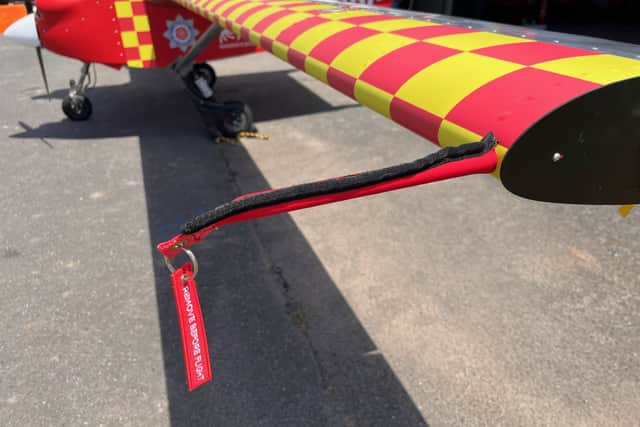
The recognition builds on several years of collaboration between LFRS and partners, including pioneering trials with autonomous drone technology and intelligent wildfire detection systems.
In 2024, Lancashire Fire and Rescue Service worked alongside Windracers, the British developer of self-flying cargo aircraft, and leading robotics and artificial intelligence researchers to test drone swarms designed to autonomously detect and suppress fires before they develop into large-scale wildfires.
During the XPRIZE finals in Alaska, the AURA Foresight system successfully combined optical and thermal sensors, artificial intelligence and autonomous drone technology to detect, verify and respond to wildfire ignitions across a large wilderness area.
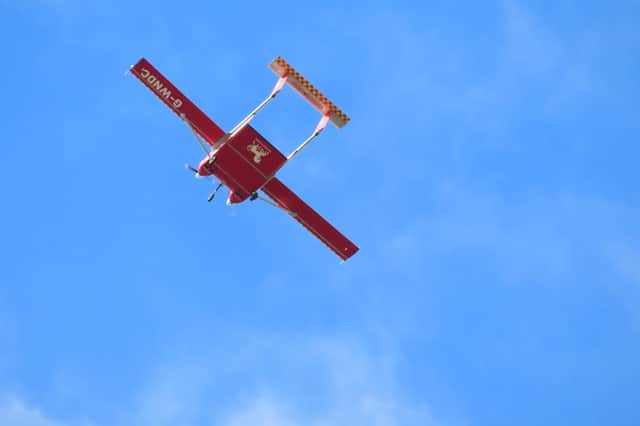
The team met the competition's critical 10-minute detection target, demonstrating how emerging technologies could help emergency services identify and tackle fires at a much earlier stage.
Mr Murrell added: “We are extremely proud to have played a role in a project that has received international recognition through the XPRIZE Wildfire competition.
“The award recognises years of collaboration between fire and rescue services, researchers and technology partners.
“While there is still work to do before systems such as these become operationally deployable, the progress made so far demonstrates the huge potential of autonomous technology to support firefighters, improve situational awareness and help tackle wildfires at the earliest possible stage.”