
Home Secretary cracking down on violent sadists like Southport killer one year on from stabbing

The Home Secretary has said she wants to ensure the ‘system is able to respond to violent fixated individuals’.
One year on from the horrific Southport stabbings in which a violence-obsessed teenager carried out a senseless and random attack on a sold-out Taylor Swift-themed dance workshop, killing three young girls, the Home Secretary has pledged to crack down on such sadistic individuals.
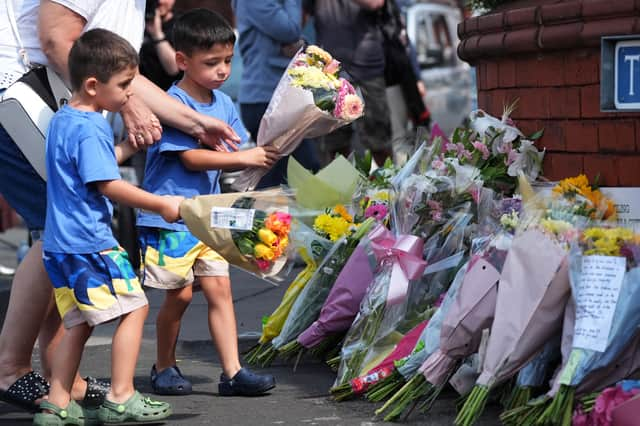

On July 29, 2024, Axel Rudakubana stabbed young girls as they sat making friendship bracelets and singing along to their favourite popstar’s music with three of Rudakubana’s victims - Alice Aguiar, 9; Elsie Dot Stancombe, 7; and Bebe King, 6 - murdered in the attack.
Now, the Home Secretary Yvette Cooper has committed to changing the law so that individuals fixated on violence are treated with the same seriousness as terrorists, promising to close a “gap in the law” relating to the planning of mass casualty attacks that lack ideological motivation but can have an equally devastating impact.

She explained: “We have to make sure that the system is able to respond to violent fixated individuals. We will tighten that legislation so that it is taken as seriously as terrorism.”
Cooper’s pledge, made in a BBC interview, would enact a recommendation from Jonathan Hall KC, the independent reviewer of terrorism legislation, who assessed whether current laws were sufficient to deal with attackers like Axel Rudakubana, the perpetrator of the Southport attack.
The review was triggered by revelations that Rudakubana had been referred to the Prevent counter-extremism programme but was not followed up, as he lacked an ideological motive. Rudakubana later killed three young girls and seriously injured 10 others during a Taylor Swift-themed dance class in Southport. He is now serving a life sentence.

While Mr Hall advised against expanding the legal definition of terrorism to cover individuals like Rudakubana, he recommended introducing a new offence to target those who plot mass casualty events driven by personal grievances or a fixation on violence.
Cooper noted a growing “pattern” of young people being drawn into violence and extreme ideologies within their own homes due to the influence of the internet. She said: “The sorts of things that we’re now increasingly seeing online with violent fixated individuals, where there may not be a clear ideology, it may be a fixation with violence, or they may switch between different ideologies.”