
Grief, mourning, riots, rebuilding, and law changes: What has happened since the Southport stabbings?

With the Southport stabbings having taken place exactly one year ago today, we take a look at what happened in the immediate aftermath of the tragic event and what has changed.
From the period before Rudakubana’s guilty plea and politicians’ comments, to law changes and the violent riots, this is what happened in the aftermath of the tragic Southport stabbings.
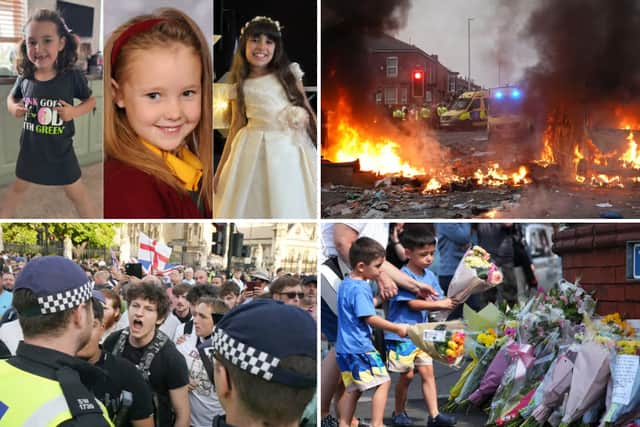

Before the guilty plea
Prime Minister Keir Starmer described the incident as horrendous and thanked emergency services for their swift response. Home Secretary Yvette Cooper expressed concern, praised the bravery of responders, and visited Southport the next day to lay flowers and meet officials.
Patrick Hurley voiced deep concern, commended local organisations for their response, and urged people not to speculate online. Starmer also laid flowers at the scene but faced heckling from some members of the public.
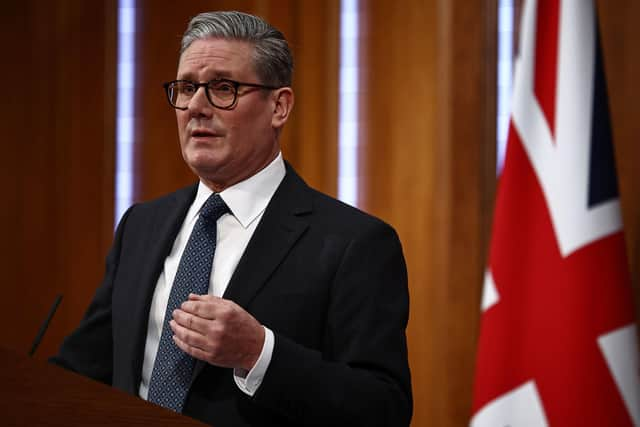
On 2 August, 10 Downing Street was illuminated pink in a gesture of respect and solidarity. Condolences were sent by King Charles III, Queen Camilla, the Prince and Princess of Wales, and Portuguese leaders, including President Marcelo Rebelo de Sousa, due to the victim’s Madeira heritage.
King Charles visited Southport on 20 August to meet survivors, families, and emergency workers, and signed the book of condolence. The next day, he held a private meeting with bereaved families. On 10 October, the Prince and Princess of Wales visited, marking Catherine’s first official appearance since cancer treatment.
After the guilty plea
After Rudakubana’s guilty plea on 20 January 2025, Home Secretary Yvette Cooper announced a public inquiry, stating that victims’ families deserved answers. Prime Minister Keir Starmer vowed to reform terrorism laws to reflect the growing threat of non-ideological attacks by individuals driven by violent impulses rather than extremist ideologies.
Criticism was directed at the Prevent programme, which had declined multiple referrals of Rudakubana due to a lack of clear ideology. Although an emergency review found that Prevent had followed correct procedures, Cooper concluded that too much emphasis had been placed on ideology and launched a further review.
David Anderson was appointed as the Independent Prevent Commissioner to lead this work. On 24 January, the Attorney General’s Office received a request to review Rudakubana’s sentence, but declined to refer it.
Cooper also criticised social media companies for failing to remove violent content accessed by Rudakubana. On 8 February, two victims' families publicly objected to the live broadcasting of sentencing remarks.
Memorials, tributes, and fundraisers for those affected
On the evening of 30 July, a vigil was held outside the Atkinson in Eastbank Square, with thousands attending. Mourners left flowers and handwritten notes both there and near the site of the attack. Taylor Swift expressed her shock and heartbreak over the tragedy, describing the victims as “just little kids at a dance class.”
She later met privately with victims’ families backstage at her London Eras Tour concerts. Fans launched a 'Swifties for Southport' JustGiving page, raising over £300,000 for Alder Hey Children’s Charity. Additional fundraising pages for the victims' families brought in over £200,000.

A memorial service for da Silva Aguiar was held at St Patrick’s Catholic Church on 6 August, followed by her funeral on 11 August, which drew hundreds lining the streets. King's funeral was held privately in Southport on 17 August, while Stancombe’s funeral took place in Birkdale on 23 August. The community united in mourning and remembrance.
Riots
Following the attack, misinformation quickly spread on social media, including false claims about the attacker’s identity. Right-wing accounts falsely claimed the suspect was a Muslim migrant or asylum seeker, with misinformation amplified by the website Channel3Now.
On 30 July, the same evening as a vigil, hundreds of protesters gathered outside Southport Mosque, located near the attack site. The protest turned violent, with bricks, bottles, and rocks thrown at the mosque, a police vehicle set on fire, and a corner shop looted.
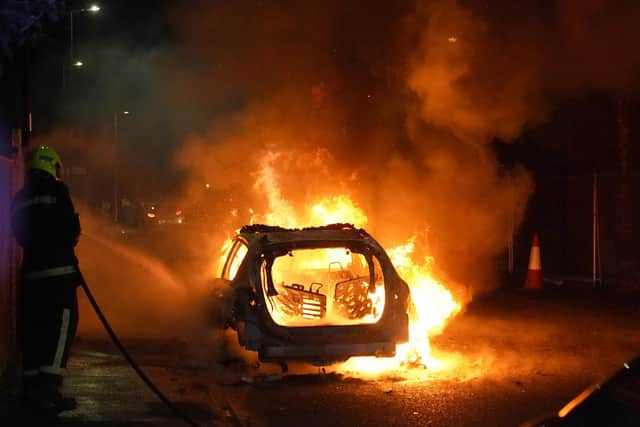
Merseyside Police linked the violence to supporters of the English Defence League and reported 39 injured officers, 27 of whom were hospitalised. The riot was widely condemned, with Keir Starmer calling it an insult to the grieving community and promising legal consequences.
Patrick Hurley said the rioters were not locals but outsiders. The following morning, locals helped clean up, but similar unrest spread across England and Northern Ireland, leading to over 1,000 arrests.
Inquiry & law changes
The inquiry will be statutory and conducted in two phases. The first phase began on July 8 and is focused on investigating the circumstances of the attack and the events leading up to it. This includes reviewing a full timeline of Rudakubana’s background and his interactions with the criminal justice system, education, social care, and healthcare services.
It will also assess how decisions were made and how information was shared between local services and agencies.
The second phase will explore broader issues around how children and young people become involved in extreme violence. The government confirmed that the inquiry has legal powers to receive evidence and hear witness testimony effectively.
Commemorative and impact hearings will take place during the week beginning September 8, with two weeks allocated. Substantive oral evidence hearings are scheduled to begin in the week of September 22.
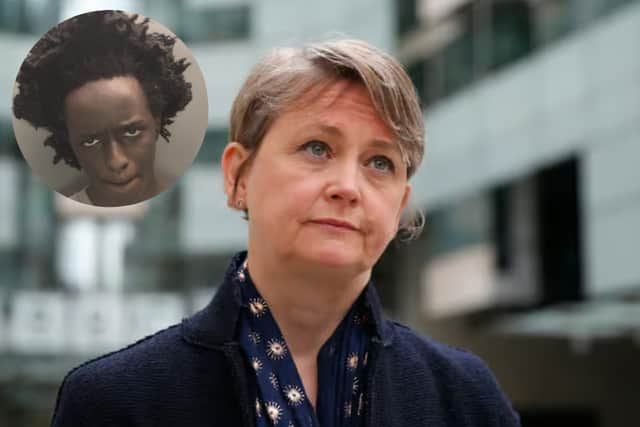
Yvette Cooper has since spoken of her determination to changing the law so that individuals fixated on violence are treated with the same seriousness as terrorists, following last year’s attack in Southport.
The Home Secretary said she would close a “gap in the law” relating to the planning of mass casualty attacks that lack ideological motivation but can have an equally devastating impact. She explained: “We have to make sure that the system is able to respond to violent fixated individuals. We will tighten that legislation so that that is taken as seriously as terrorism.”