
We're reclaiming Preston's most famous suffragette Edith Rigby’s derelict former home to preserve her legacy
A group of campaigners are looking to restore the former home of Preston's most famous suffragette and turn it into a museum.
The property on Winckley Square once belonged to prominent suffragette Edith Rigby and her husband Charles and the Friends of Edith Rigby want to commemorate her by turning it into a centre recalling her life and depicting the history of women’s suffrage in general.
Newly registered as a community benefit society, the group want the public’s help in fund-raising to make it a reality and are provisionally looking at 2028 – which will be the centenary of every adult being entitled to vote – as an ideal target date for its launch.
There is a lot to do first, however, says Friends secretary Emily Castle, and the initial step is to talk to the owners of the currently long empty property – which bears a blue plaque commemorating Edith – about making the group’s dream a reality.


“The aim is for the building to be converted into a women’s suffrage museum and education centre,” said Emily, a 25-year-old student of history at the University of Central Lancashire who hails from Preston.
“As well as being a space open to the public, it will be a way to attract tourism to Preston and we could have school trips. It will be the first of its kind in the country.
“Edith was a pioneering suffragette and champion of social justice and we are dedicated to preserving her legacy by transforming her former home into a vibrant community museum, serving as a cultural hub for the people of Preston and beyond, celebrating the rich history of the suffrage movement, the life of Edith, and the broader history of democracy in the UK.
“Through our exhibitions, events, and educational resources, we aim to bring together communities, promote creativity, and make history accessible to all – free of charge.

"We are committed to creating an inclusive and welcoming environment where individuals of all ages and backgrounds can connect with the past, engage with innovative ideas, and come together to shape the future.
“By reclaiming Edith’s home from the brink of dereliction, we are ensuring her story, and the values she fought for, remain a vital part of our shared heritage. We hope people will join us in our campaign to save this historic site and create a museum that will inspire and empower generations to come.”
The Friends, who formed earlier this year and would welcome newcomers at their regular meetings at the Central Methodist Church in Lune Street, have taken inspiration and encouragement in their aim from the setting up of the Pankhurst Centre in Manchester, the former home of the bst-known suffragette, which opened in 1987 following a campaign to save it from demolition and turn it into a museum.
"That shows what is possible and we feel Edith deserves similar recognition,” said Emily. “Edith is known of in Preston – with more interest sparked after she was commemorated in the naming of the new Preston West Distributor Road last year – but generally not so much nationally.
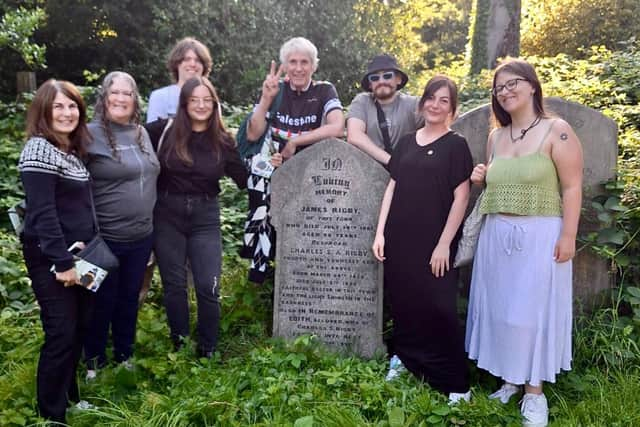
"A lot of history tends to be recorded on a national basis and local achievements can be forgotten. She was a major figure in Preston and we want to make sure that is remembered for generations to come.
"As Edith once said: ‘Surely there are some people who will not let the wonderful heritage found by us … be lost, through neglect and lack of interest, to the generations of men who are to follow us?’.”
The Friends admit it would take a lot of money to achieve their aim, but believe in taking it one step at a time. “Becoming a community benefit society has been the first aim, next we want to talk to the property owners and we are in touch with other organisations such as the Friends of Winckley Square about how this would help benefit the city.
"The interior of the property has changed notably since Edith’s time and we feel two rooms within it for our plans would perhaps be a realistic aim. Hopefully in the future we could apply for grants to fund the work but any help people can give us in the meantime would be very welcome.”
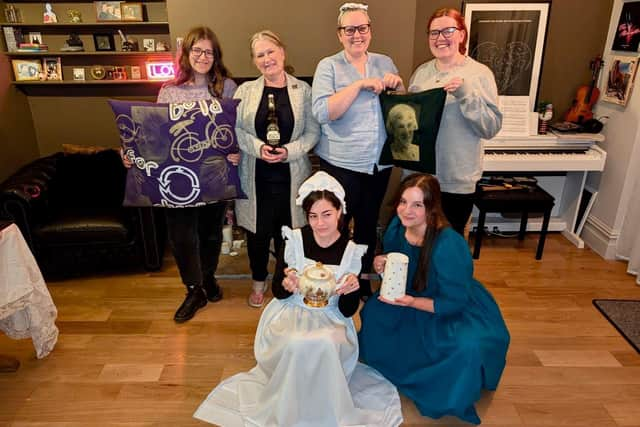
The Friends, who already have Edith merchandise on sale to help raise funds, are singing carols outside the Winckley Square property on Saturday, December 7 from 2pm.
Details about their plans and how to get involved are at friendsofedithrigby.wordpress.com/
Determined Edith’s lasting place in history
Edith Rigby, née Rayner, lived from October 18,1872 to July 23, 1950, born in Preston, educated in North Wales and married Dr Charles Rigby, living with him at the home in Winckley Square.
From an early age, she questioned the differences between working-class and middle-class women and after she was married, worked hard to improve the lives of women and girls working in local mills.
In 1899, she founded St Peter's School in Preston, which allowed such women to meet and continue their education which otherwise would have stopped at the age of 11.

At home, she was critical of her neighbours' treatment of their servants. The Rigbys had servants themselves, but allowed them certain unconventional freedoms such as being able to eat in the dining-room and not having to wear uniforms.
In 1907, Edith formed the Preston branch of the Women's Social and Political Union and she was a suffragette recruiter.

She took part in a march to the Houses of Parliament with fellow suffragettes Christabel and Sylvia Pankhurst in 1908 and was among 57 women arrested and sentenced to a month in prison.
During seven subsequent sentences, Edith took part in hunger strikes and was subjected to force-feeding.
Her activism included planting a bomb in the Liverpool Cotton Exchange in 1913 and although it was later stated in court that ‘no great damage had been done by the explosion’, she was found guilty and sentenced to nine months' imprisonment with hard labour.
In the First World War, she bought a cottage near Preston and used it to produce food for the war effort.
In 1926, Charles Rigby retired and the couple built a new house, called Erdmuth, outside Llanrhos, North Wales, where she died in 1950 after suffering from Parkinson's disease.

Road named in her honour
The Preston Western Distributor Road, which opened last year linking parts of Preston and the Fylde to the M55 motorway, is named in honour of Edith.

Preston City Council leader Coun Matthew Brown said at the time of the opening: "Preston has had male names for new roads in recent years: Tom Benson Way, Sir Tom Finney Way and James Towers Way, so it is about time we paid homage to an iconic female Prestonian.
"Edith Rigby did so much for Preston women including allowing girls in Preston to continue their education beyond 11 years old. She was a champion for equality for both social class and gender and fought for the rights of women who worked under awful conditions.
"Among her many achievements, she helped to establish the first union for women in Preston outside the textile industry. Edith is most definitely worthy of being remembered through this new road name."