
This is what Reform UK in Lancashire thinks about fracking as national party backs it
Reform UK in Lancashire says it believes any future fracking activity in Britain will be focused hundreds of miles away on the other side of the country – and that local conditions are “not conducive” to restarting the controversial process where it was previously carried out on the Fylde coast.
The ruling group on Lancashire County Council was responding to comments made by Reform’s national deputy leader in which he championed shale gas as an untapped source of energy.
Richard Tice said earlier this week that should the party get into government in 2029, it would lift the current indefinite ban on fracking in the UK and start testing new extraction techniques at a small number of independently-monitored sites.
"That will confirm the quantity of gas available and satisfy people that it's safe," he declared, in what amounted to a restatement of a Reform manifesto commitment ahead of last year's general election to "enable major production when safety is proven, with local compensation schemes [put in place]".
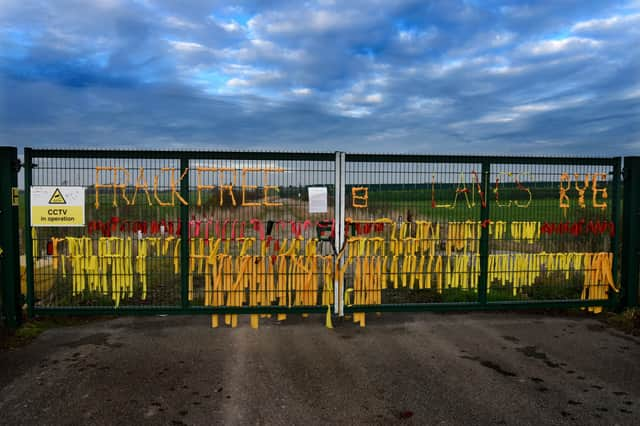
However, his enthusiasm has provoked anger amongst anti-fracking campaigners in Lancashire, where the process - which involves water and chemicals being pumped into shale rock at high pressure to extract gas - has a long and volatile history.
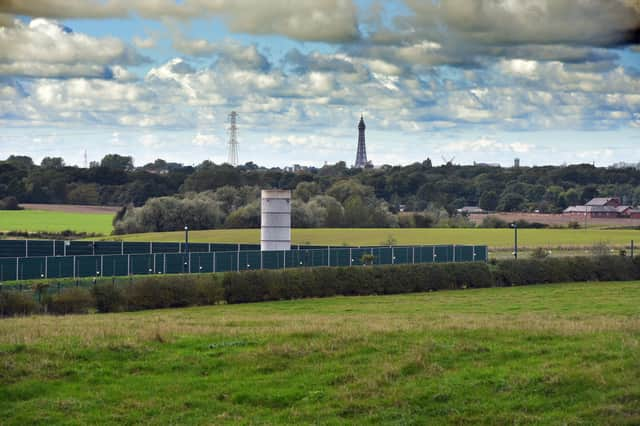
A site off Preston New Road in Fylde became the focus of semi-permanent protest after the government gave the green light for test drilling by energy firm Cuadrilla in October 2016.
The process was suspended – and the national ban, or moratorium, imposed – in 2019 after a series of tremors at the Little Plumpton plot that year, the largest of them measuring 2.9 on the Richter scale.

Nick Danby, from Frack Free Lancashire, told the Local Democracy Reporting Service (LDRS) that Reform would face “massive and sustained opposition, both nationally and locally, if they try to resurrect fracking”.
However, deputy Lancashire County Council leader Simon Evans sought to soothe local concerns.
He said the authority’s cabinet member for rural affairs, environment and communities, Joshua Roberts, had already made it clear that “the conditions in the Fylde coast are not conducive to fracking – and there are no plans for it to take place here”.
County Cllr Evans added: “While Reform UK does support fracking on a case-by-case basis, any activity is expected to be more likely in the East of England rather than the North West.
“County Cllr Roberts will continue to support local residents and liaise with them regularly to ensure their concerns are heard and represented.”
The two wells that were drilled alongside Preston New Road have now been plugged as part of the process of restoring the site, as required by the planning permission granted for the drilling.
The LDRS approached Cuadrilla for comment on Reform UK’s national stance on fracking – and any implications the company considered it might have for future exploration in Lancashire – but did not receive a response.
Any fresh applications for fracking in the county would – at least initially – be determined by Lancashire County Council’s cross-party and politically independent development control committee, with the councillors who sit on it being guided by advice from the authority’s non-political planning officers .
That committee refused permission for the Little Plumpton scheme in 2015, before the then Conservative government overturned the decision a year later.
Nick Danby said that the national fracking moratorium “is in place for a very good reason”.
“Let nobody forget that the fracking activity at the Preston New Road site caused numerous earthquake tremors – exactly as we predicted.
“We need to embrace greener and cleaner energy as a matter of urgency. Climate change is very real and to deny this is grossly irresponsible.”
Lancashire County Council leader Stephen Atkinson said at a cabinet meeting in June that he believes in “the climate science” around global warming, but – like Reform at a national level – he has been highly critical of the pursuit of net-zero carbon targets in the UK, in the absence of the rest of the world going down the same path.
County Cllr Roberts declined to advance his own opinion on climate change science at a full council meeting the following month, but insisted that Lancashire residents were being made “poorer” by attempts to reach what he described as an “unachievable” net-zero aim by 2050.
Conservative Prime Minister Liz Truss sought to lift the fracking ban during her fleeting time in office in late 2022, but Rishi Sunak committed to keeping it in place when he succeeded her.
Richard Tice, who is also Reform UK’s energy spokesperson, said there was “potentially hundreds of billions” in “energy treasure [available] in the form of shale gas”.
He added that it was “grossly financially negligent to a criminal degree to leave that value underground and not to extract it”.
However, Frack Free Lancashire’s Claire Stephenson, rubbished that characterisation of the claimed benefits of fracking.
“Calling shale gas a ‘treasure’ ignores the wreckage it left behind in Lancashire. Since 2011, every attempt to frack here has failed – on safety, on economics and on public consent.
“What’s grossly negligent is pretending a busted industry is the panacea to today’s energy crisis when renewables are cheaper, cleaner, and actually deliver,” Ms. Stephenson said.
County Cllr Roberts recently told the BBC that fracking “has its place, but not everywhere”, adding that the particular geology in Lancashire risked issues such as water contamination and subsidence being caused.
Back in 2011, another Cuadrilla fracking site – near Weeton, also on the Fylde – was linked to two earth tremors. That also led to a temporary ban on the process nationwide, which was later removed. The firm pulled out of the project in 2013.
FRACKING’S LONG FAREWELL TO FYLDE – WHAT’S THE HOLD-UP?
Under the planning permission granted for test fracking at Little Plumpton, Cuadrilla was required to complete all decommissioning and restoration activity within a period of 75 months of drilling getting under way in April 2017
That should have seen all evidence of the area’s flirtation with fracking removed – and the site returned to its former use as an unremarkable agricultural field – by July 2023.
However, the firm applied for – and was granted in June 2023 – a two-year time extension from Lancashire County Council to reach that end state.
At the time, Cuadrilla explained that the decommissioning process was lengthy – not least because of the eight months it was then expected to take for the necessary safety checks to be carried out in order for the company to be able to surrender its fracking permit to the Environment Agency.
During that period, the boreholes were to be filled in with concrete – but it was only after the relinquishing of the licence that the subsequent restoration works could begin.
However, Cuadrilla has now requested a further extension of time to complete the process – asking the county council for another two years to put the site back the way it was. It stresses that the wellbores have now been “safely plugged and decommissioned”.
In an application lodged with the county council in June, the firm says it needs to “maintain the existing site for environmental monitoring” ahead of its full restoration – and reveals that it has still not surrendered its environmental permit.
A planning statement from the company says: “The two gas exploration wells on the site have been plugged with cement in accordance with government regulations and the site cleared of all equipment and material.
“The proposed development will not include further drilling or hydraulic fracturing. The proposed time extension is for a further 24 months to allow sufficient time to complete monitoring requirements as required by the Environment Agency and subsequent site restoration.”
Cuadrilla said so-called “post abandonment” monitoring was expected to have begun in June this year and would last for a minimum of 12 months.
The two decommissioned hydrocarbon wells require assessment for any methane emissions above the wellbores, while there are also eight groundwater monitoring locations within the site boundary.
Cuadrilla now says that it is only after the minimum monitoring period is over that it will be allowed to apply to the Environment Agency to surrender its permit to operate the site..
The eventual restoration of the land is scheduled to take around four months, but will be dependent on weather conditions.
The concrete pad and cellar in the centre of the site will be deconstructed and all other infrastructure removed. The surface of the plot will then be levelled and the land reseeded.
Cuadrilla was approached for comment on the delay in the restoration process.
Fylde’s Conservative MP Andrew Snowden told the LDRS he was “pushing Cuadrilla to get the site back to farmland as soon as possible”.