
How wildlife and locals will benefit from Lancashire wetlands transformation
Wildlife will flourish and residents find their homes better protected from flooding after the completion of a major wetlands restoration project in the Ribble Valley.
The site at Cow Ark, north west of Clitheroe, has been transformed as part of an initiative that aims to give nature a boost, improve water management and strengthen resilience to climate change.
The scheme - which has taken a matter of months - has seen the creation of a network of new wetlands, wader scrapes, hedgerows and woodlands.
The works have generated a thriving “habitat mosaic”, according to the Ribble Rivers Trust, which delivered the changes in conjunction with local landowners.
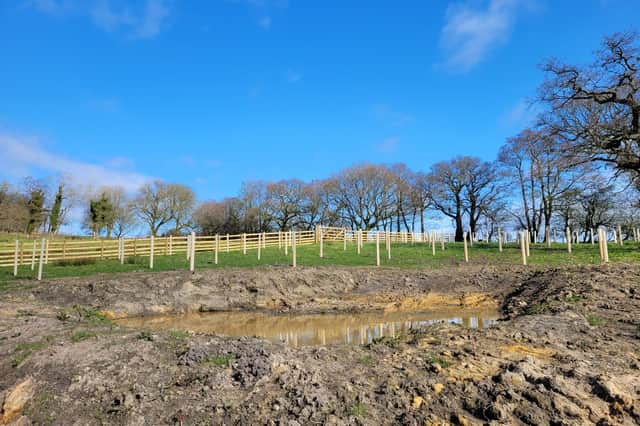

Wetlands and wader scrapes now hold water for longer, providing vital feeding grounds for wading birds and homes for amphibians and invertebrates. Newly-planted hedgerows link up existing habitats, giving cover and nesting opportunities for birds and small mammals, while woodland areas provide shade, stabilise soils, and capture carbon.
As well as improving biodiversity, these new features bring practical benefits for local communities. Wet ditches and natural flood management measures have been introduced to slow the flow of rainwater across the land. That helps trap sediment before it reaches rivers, reduces the risk of flooding downstream and ensures water availability during dry periods—vital for both people and nature.
The landowner has also embraced wildlife-friendly practices by installing dead hedges and log piles for insects, reptiles, and small mammals - and adjusting grassland management to encourage wildflowers and pollinator species. That all helps to create a more diverse and robust food chain which supports the entire ecosystem.
The area was previously dominated by what was described by the trust as “monoculture grassland”, with the site offering very little to encourage wildlife and few benefits for soil health, water storage, or carbon capture.
“With almost no structural diversity, it lacked the resilience to withstand extreme weather, leaving both wildlife and people vulnerable to the growing impacts of climate change.
By replacing low-quality grassland with wetlands, woodland, and hedgerows, the project has restored “natural processes that underpin healthy ecosystems. Wildlife now has food and shelter, water quality is improving, carbon is being locked away in vegetation and soil, and the land is better equipped to manage floodwater naturally,” the trust said ina statement marking the completion of the project.
Although the major works are complete, further enhancements are planned, including wetland plug planting to increase biodiversity. The trust says the landowner’s commitment to the “long-term stewardship” of the site means it will remain “a haven for nature and people for years to come”.
The project was funded by the Species Survival Fund, a £25 million initiative administered by The National Lottery Heritage Fund on behalf of the Department for food, environment and rural affairs. . Ribble Rivers Trust has secured £1.65 million from the fund to drive nature recovery across the Ribble Catchment, working with farmers, landowners, and conservation partners to restore more than 3,300 hectares of vital habitat.