
Toxic giant hogweed plant that can burn humans and blind dogs 'rampant' on riverbank near Preston
Skin can be left appallingly blistered after contact with the invasive species.
There are calls for action over the spread of a dangerous plant close to a riverbank in South Ribble.
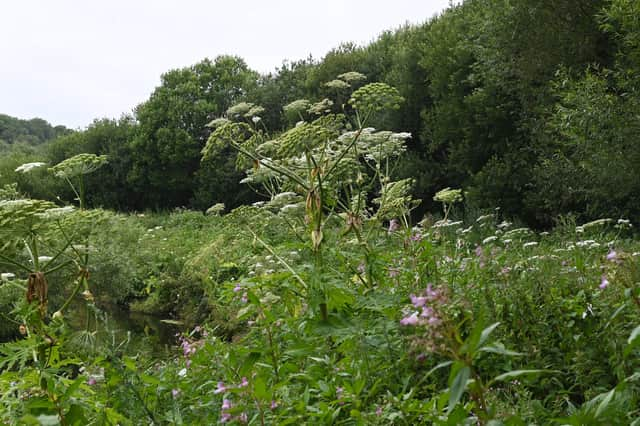
Giant hogweed has taken root - and rapidly multiplied - alongside the River Darwen in Walton-le-Dale.
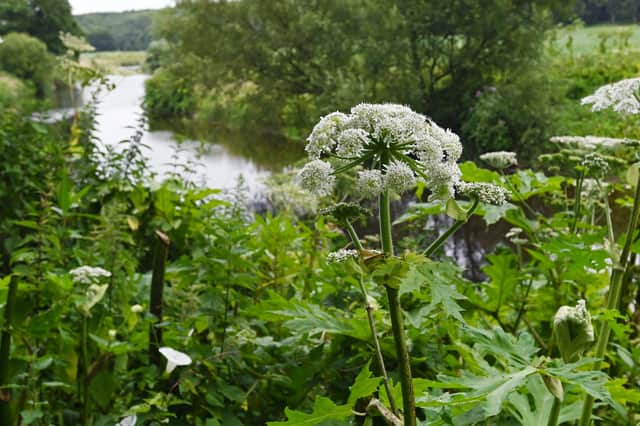

The threat from the invasive species is posed by its toxic sap, a liquid that can cause severe burns - and hideous blistering - if it gets onto skin that is then exposed to sunlight.
Dogs and other pets are partially protected by their fur, but if the substance goes directly into their eyes - as a result of them burying their faces in hogweed foliage - it can blind them, according to the Woodland Trust. The same fate could befall a human who was similarly exposed.
Hogweed sap can leak into the open when stems, leaves and flower heads are broken or because of the activity of insects that feed on it. Just brushing past it is enough to contaminate a person’s skin, which immediately becomes ultra-sensitive to the sun.
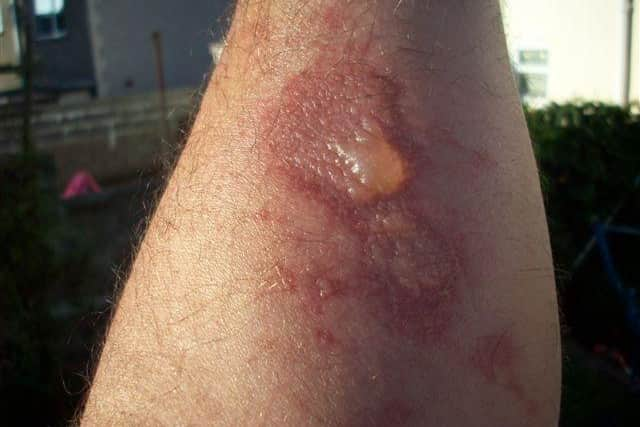
The resultant ‘phytotoxicity’ can even cause blistering to recur in sunlight for many months after the initial incident.
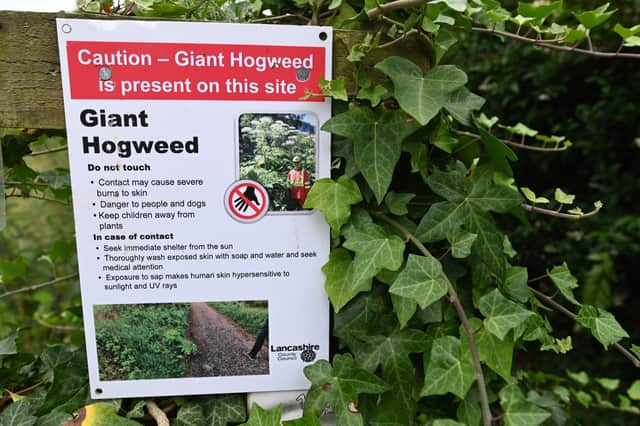
The Lancashire Post has established that the affected location - off Higher Walton Road - is privately owned, but publicly accessible. It lies just a few steps from a public footpath - and Lancashire County Council has erected signage warning of the presence of the perilous plant in the area.
However, the authority says it has no duty to clear hogweed from private land, while the landowner told the Post that the problem is “very difficult…to control” without the co-operation of the Environment Agency, in its role as the body responsible for rivers.
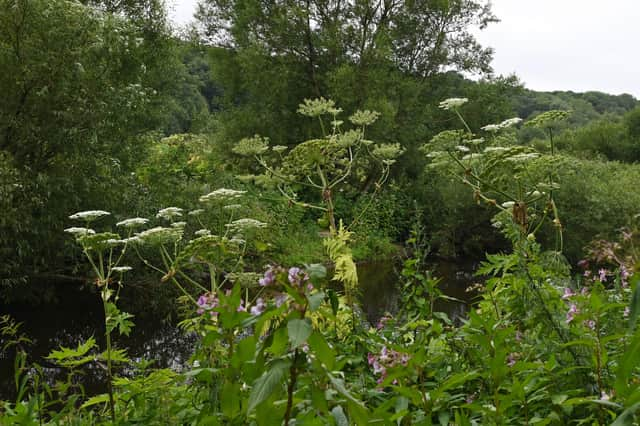
Some of the giant hogweed growing in the spot is around six feet tall - and the plant is known to grow to almost three times that size if left unchecked.
The footpath - diagonally opposite St. Patrick’s Roman Catholic Primary School - used to lead to a bridge over the river, but that was washed away in a storm at the turn of 2025.
Nevertheless, the route down to the river remains in use and there is no physical barrier or notice to stop walkers then strolling alongside its banks.

Join our WhatsApp channel
Beekeeper Steve Ganner, who has hives nearby, says he regularly encounters people on the stretch where the hogweed has run wild.
He told the Post that someone needs to take responsibility for removing the plant - which has also sprung up in an adjoining woodland area - before anyone is seriously hurt.
“It's a narrow pathway along the riverbank - you regularly have to move aside for people - and the hogweed is just rampant all over.
“I’d say there’s probably a 50-50 chance in the 150 yards I use of bumping into [families] with children and with dogs.
“It's a real worry [that] children are going down there and, of course, dogs will rummage around in anything.
“I’ve got my bee suit on, but I still use a stick to clear the way, because I don't want it to get onto [the fabric]. I’m even considering not using that site for my hives anymore, as it’s that bad.
“And it is now starting to encroach on the public footpath," Steve said.
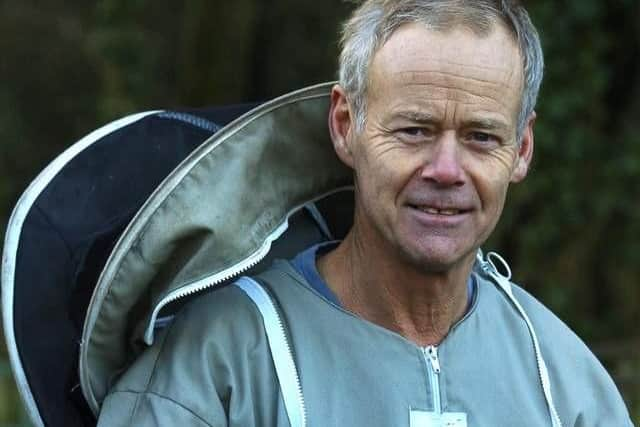
He recalls greater public awareness of the plant’s potential danger in decades gone by, when he says there would be posters in GP surgeries showing the injuries it could inflict. But he fears that most people would nowadays not only fail to identify it - but also be oblivious to its capacity to burn unsuspecting passersby.
Another local source - who did not want to be identified - echoed Steve’s call for a concerted effort to be made to eradicate the problem. They also claimed the area was regularly sprayed with herbicide until recent years - and when that treatment ceased, the hogweed went on the march.
The Post identified the landowner as Gibraltar-based Tallentine Limited, which said it was the freeholder for the site.
A spokesperson for John Forrester Chartered Surveyors and Land Agents - which represents Tallentine and the Trustees of the de Hoghton Settled Estate - said: “We are aware of the presence and issue of giant hogweed, along with other noxious invasive species, which are within the embankment of the River Darwen. This is a severe issue along the whole of the lower lengths of the [waterway].
“Over the years, the invasive species have grown significantly more prevalent and are a burden to landowners along a variety of catchments in the North West.
“Whilst we appreciate the impact that the invasive species are having on the native flora and fauna, without a co-operative and pragmatic approach by the bodies responsible for the main rivers (the Environment Agency) - which is a major contributory factor to the uncontrollable spread of the weeds - it is a very difficult issue to control.
“However, the estate does work with its tenants and with conservation charities to try and deal with the problem and will continue to do that.
“There is no public right of way on the area of the estate [in question] and, therefore, we consider that the risk to the public is minimal.”
An Environment Agency spokesperson said: “It isn’t illegal to have an invasive species like Giant Hogweed growing on your land but it is illegal to allow it to grow or spread outside of your land.
"It is the responsibility of the private riparian landowners to prevent INNS such as Giant Hogweed from spreading and not the Environment Agency."
Each hogweed plant produces around 50,000 seeds, which can be transported on the wind and, even more readily, through water - making it easy for it to populate locations.
The Post understands there is an active programme to help tackle invasive non-native species on the earth flood embankment at Grove Road in Walton-le-Dale, although the Environment Agency is not routinely funded to undertake the removal of such speciies.
It is believed the best approach to invasive species management is an eradication effort starting at the top of a river catchment and working its way down - but that would require collaboration and co-ordination potentially between multiple landowners and certainly between multiple public sector bodies and charitable organisations.
Landowners can be ordered to remove the plant from their property by a relevant environmental authority, but there is no suggestion that has occurred in this case.
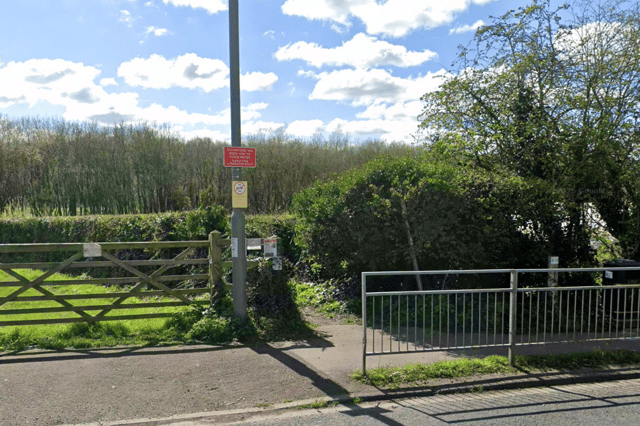
Lancashire County Council said its public rights of way team “treats giant hogweed along the recorded public footpath at this location and warning signage is in place to raise awareness of the risks associated with the plant”.
A spokesperson for the authority added: "Responsibility for managing giant hogweed on adjoining land rests with the landowner. While landowners have a responsibility to prevent the plant spreading onto neighbouring land, there is no general duty to remove it unless it interferes with a public right of way.
"Giant hogweed can cause serious skin irritation and burns if touched. We would advise anyone using the footpath to avoid contact with the plant and keep children and animals away from it."
The Post also approached St. Patrick’s RC School for comment regarding the presence of hogweed in the vicinity.
What to do if you come into contact with giant hogweed
The First Aid Training Co-operative recommends the following course of action for anyone who has been exposed to giant hogweed:
- immediately wash the area with copious amounts of soap and cool water;
- stay out of any sunlight for at least 48 hours;
- don’t burst any blisters and seek medical help if they are extensive - a pharmacist or GP initially;
- monitor for any delayed reaction;
- flushing the eyes with copious fresh water as a precautionary measure is also advisable;
- thoroughly and quickly wash the clothes you were wearing when you came into contact with the plant.
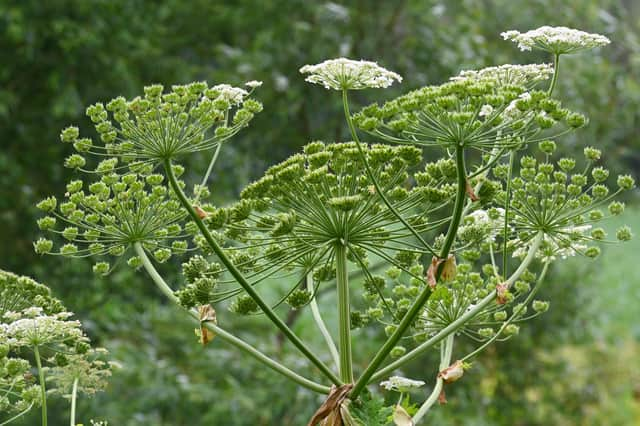
Recognising the risk: what giant hogweed looks like
***jagged-edged leaves, hairy underneath, which can ultimately grow five feet wide and 10 feet long; often described as looking similar to the rhubarb plant;
***white flowers, up to two feet wide, that form an umbrella-style, upward-facing cluster, appearing in June and July;
***green stems, often featuring purple blotches, and with stiff, white hairs.
Sources: Royal Horticultural Society and Woodland Trust
This article was updated at 9pm on 12th August to add a response received from the Environment Agency.