
Father says son was failed by mental health services before Preston Docks death
"He was clearly in crisis. We made every effort to get relevant support for him."
The father of a 28-year-old man who drowned in Preston Docks told an inquest he felt "let down" by mental health services in Lancashire.
Preston Coroners Court heard that Aayam Chhetri had suffered from mental health problems since taking drugs at a music festival.
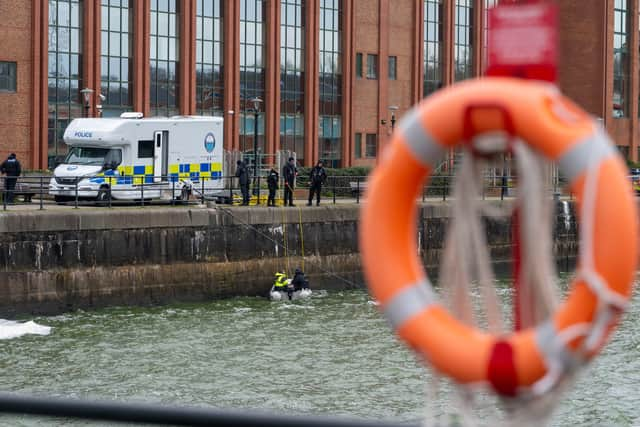
The trainee accountant left his home during the night in March 2026 and went to Preston Docks. CCTV showed him standing by the water's edge for two minutes or so before jumping into the water.

His father Dan said that when his son was in crisis he tried to contact mental health teams 19 times by phone to get help for Aayam before finally going to an office in person.
He told area coroner Emma Mather: "I feel let down by the support that the community mental health team provided to my family.
"He was clearly in crisis. We made every effort to get relevant support for him."
The coroner recorded a suicide conclusion at an inquest into Aayam, of Ashton-on-Ribble, Preston.
His father told the court in a statement that his son went to a music festival in 2019 and took drugs.
After that he became "very poorly" with drug-induced psychosis and needed hospital treatment. He was given medication for this but over the following years became unwell again and struggled with his mental health.
Get breaking news, updates and top stories direct on WhatsApp
Mr Chhetri said that in November 2025 his son's medication was changed. He appeared sleepier.
On March 15 2026 the family went to bed. He was aware that Aayam had gone out for a cigarette. He thought he had come back to bed but the following morning was contacted by police.
The inquest heard that the alarm was raised in the early hours of March 16. Personal possessions were found by the marina, and CCTV showed a man jumping into the water.
Aayam's body was recovered later that morning. The cause of death was drowning and there were no suspicious circumstances.
The coroner heard that mental health professionals engaged with Aayam but no-one feared he was a serious suicide risk. Consideration was given to changing his medication, but it was felt he could benefit from behavioural therapy.
He was offered therapy, but said he "wasn't ready."
When he was seen just days before his death, he did not speak of intending to take his own life.
Coroner Ms Mather said it was clear Aayam was a much-loved and intelligent young man.
She felt that Aayam's death "was not predictable".
But she accepted his father's claims that communication from mental health services could have been better.