
Convicted murderer up for parole after teen's dismembered body found behind Blackpool hotel

A man convicted of one of Blackpool’s most disturbing murders is being considered for release more than 27 years after killing a teenager whose dismembered body was found behind a hotel in the resort.
First parole review after life sentence
Stewart Diamond, now 47, is undergoing his first parole review after being convicted in January 1999 of murdering Christopher Hartley, who was 17 at the time of his death.
Christopher’s torso and lower body were discovered in a wheelie bin behind a hotel in Blackpool, while his head was never found during the original investigation.
Diamond was sentenced to life imprisonment with a minimum term of 17 years, later reduced on appeal to account for time spent on remand.
His tariff expired in January 2015, but he has remained detained ever since.
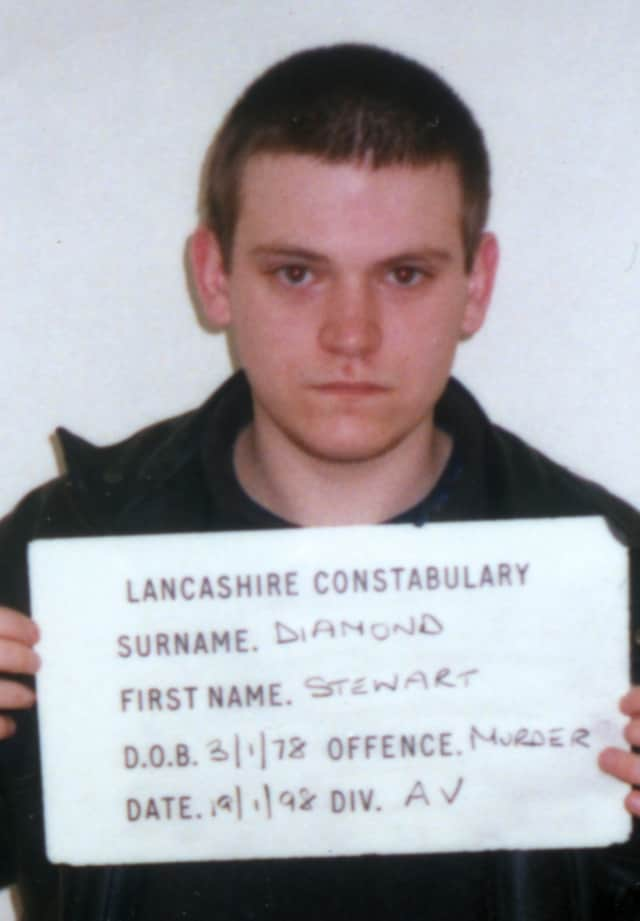

Hearing to be held in private
The Parole Board has confirmed that an oral parole hearing has now been scheduled to assess whether Diamond could be safely released or moved to open conditions.
However, an application for the hearing to be held in public has been refused.
A Parole Board judge ruled that the hearing should take place in private due to concerns over Diamond’s mental and physical health, and the need to examine extensive psychiatric and medical evidence.
The judge concluded that a public hearing could cause “considerable, undue emotional distress” and risk undermining the fairness of the proceedings.
Long-term detention in psychiatric care
Soon after his conviction, Diamond was transferred from prison to hospital under mental health legislation.
The Parole Board said he has remained in secure psychiatric settings ever since after displaying symptoms of psychosis from a young age and suffering from paranoid ideation.
Although his minimum term expired more than a decade ago, he was not referred for parole at that stage due to his continued hospital detention.
His case was formally referred for review by the Secretary of State for Justice in March 2025.

‘Transparency’ arguments rejected
The request for a public hearing argued that openness would promote transparency, boost public confidence and reflect ongoing media interest in the case.
While the Secretary of State acknowledged the importance of transparency in serious cases, Diamond’s legal team opposed the move, warning that public scrutiny could worsen his condition and affect his ability to engage with the process.
The parole panel chair also advised that much of the evidence would need to be heard in private regardless, limiting the value of a public hearing.

Background: threats and killing
Court records show Diamond had spoken to psychiatrists as early as 1996, admitting he feared he would kill someone and mutilate their body.
In the early hours of December 30, 1997, he killed Christopher Hartley at his flat on Park Road, Blackpool, after enticing the teenager - who was homeless and struggling with drug use - inside.
At the time of the killing, Diamond was on parole from a young offenders’ institution following earlier violent offences.
Victim’s head never recovered
Christopher’s head was never found, and Diamond refused to reveal its whereabouts for years.
In 2006, he finally admitted the killing while pursuing an appeal based on diminished responsibility.
During those proceedings, he told doctors he had thrown the head into the sea.
His case was referred to the Criminal Cases Review Commission, but in 2008 the Court of Appeal rejected his appeal, ruling his conviction should stand.

What happens next
The Parole Board said its primary concern remains public protection. A summary of its eventual decision will be published once the parole review has concluded.
Diamond remains etained while the process continues.