
Cadent introduces 'gas sniffing' cars to North West streets - with someone reporting a leak every 8 minutes
Did you now this was a thing?
Special ‘gas sniffing cars’ are on the streets of Lancashire - as Cadent works to reduce leaks across the North West.
The company has revealed that someone reports a smell of gas every eight minutes in the region - with more than 67,000 calls to the national gas emergency number in 2025.
As part of their safety work, Cadent has also got specially trained rhinologists on the ground - to make sure the warning smells of gas are correct.
Natural gas has no smell of its own, so a specially made chemical (mercaptan) is added to give it the distinctive odour people associate with gas. This acts as an important warning sign to let people know a leak may be present and to immediately call the national gas emergency number on 0800 111 999.
Cadent’s rhinologists are trained to detect whether the right level of mecaptan is present in the gas supply. Getting the balance right is critical, if the odour is too strong, a small leak could be mistaken for a major incident; if it is too weak, people may not detect a gas escape at all.
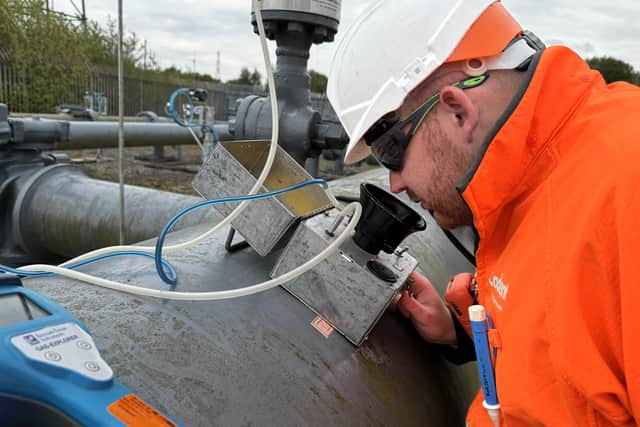

James Dyson is four Lead Rhinologists at Cadent in the North West responsible for ensuring the correct levels of mercaptan are maintained across 34,000km of pipeline in the region.
Across the North West, odourant is injected at gas pressure control sites and entry points. The rhinologists test levels at several different locations, as well as carrying out additional checks at many district governors, where gas pressure is reduced before it reaches homes and businesses.
James said: “It’s a serious job with potentially life-threatening consequences if we get it wrong. To ensure we are fully competent, we test ourselves rigorously, completing checks every quarter and before every site visit. We also attend external training every year.
“To cross-check our results, we use a portable device known as an odorimeter that presents a controlled mixture of gas and air to the human nose, helping us ensure we meet strict standards.”
While the smell of gas remains an important safeguard for customers. Cadent is also investing in advanced technologies alongside its specialist teams to identify gas escapes even earlier.

Gas sniffing cars
Picarro, a ‘gas-sniffing’ device fitted to specialist vehicles, is now used across Cadent’s networks to help detect gas escapes before the odour is noticeable to the human nose. In the North West alone, over half of the gas pipeline have been surveyed using the technology.
Nick Jerman, Head of Engineering and Safety at Cadent North West, said: “Innovating our detection processes has safety and environmental benefits, while also helping us prioritise work for our repair and replacement teams. The device has accurately identified gas escapes in rural areas where it is unlikely residents would have noticed a smell of gas.
“By helping the public understand what gas smells like, and by using technology to identify gas escapes before they become noticeable, we can find leaks quicker, reduce disruption and help keep people safe and warm every day.”