
Blackpool Zoo celebrates the birth of an adorable new Anteater pup
An exciting new arrival has delighted staff and visitors alike as Blackpool Zoo celebrates the birth of a giant anteater pup to proud parents Andina and Eskil.
There’s exciting news at Blackpool Zoo this spring as giant anteaters Andina and Eskil have welcomed a new addition to their family.
Sign up for our Blackpool Gazette retro newsletter - warm nostalgia delivered to your inbox - weekly.
Born on March, 2, the tiny pup is the pair’s fourth offspring together and is already settling in well.
Keepers have said that both mum and baby are doing brilliantly with the youngster rarely far from Andina’s side.
In a behaviour typical of the species the newborn can often be seen hitching a ride as it clings tightly to its mother, perfectly camouflaged by markings that closely resemble her own.
Visitors are being encouraged to keep a close eye out during their next trip to the zoo to try and spot the well-hidden arrival.
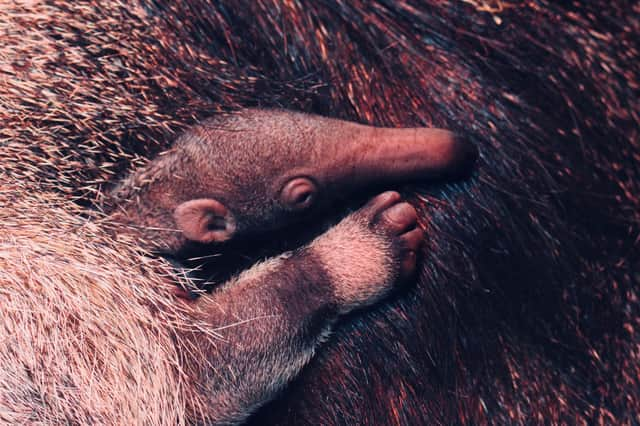

The pup joins older sister Myrtle, now two years old, making this a growing family group that continues to thrive under the care of the zoo’s animal team.
While the baby’s gender has yet to be determined, keepers are closely monitoring its development and say it is already showing positive signs of health and strength.
Giant anteaters are native to Central and South America and are known for their distinctive long snouts and bushy tails.
Births like this are an important contribution to the conservation of the species, which faces increasing pressure in the wild.
Zoo staff have shared their delight at the new arrival, describing it as a “special moment” for the team.
Jason Keller, Senior Keeper, said: “Giant anteaters are such a unique species and every birth is really important for their conservation.
“They are classified as vulnerable to extinction in the wild and, with populations in continued decline, they are considered the most threatened mammal in Central America.
“The new arrival is already able to walk around on its own but, like all baby anteaters, prefers the safety of mum for now. This means that for the next six to 12 months it will be riding round on its mother’s back, which is such a lovely sight to see.
“With such distinctive markings it is a little hard to spot the baby at first as it blends in with mum, but it is worth a closer look as once you catch a glimpse of that tiny snout you won’t be able to take your eyes off it!”
Giant anteaters hail from the swamps, grasslands and humid forests of areas from Southern Belize to northern Argentina and they are the last living species to have evolved on South America when it was an isolated continent.
For now, the focus remains on giving the pup the best possible start and giving visitors the chance to witness a truly special sight.