
As Dennis The Menace turns 75, meet the Preston man who created his cousin Minnie The Minx
This week, Dennis The Menace turned 75. But did you know that his ‘cousin’ - and a whole host of other Beano favourites, were created by a Preston man?
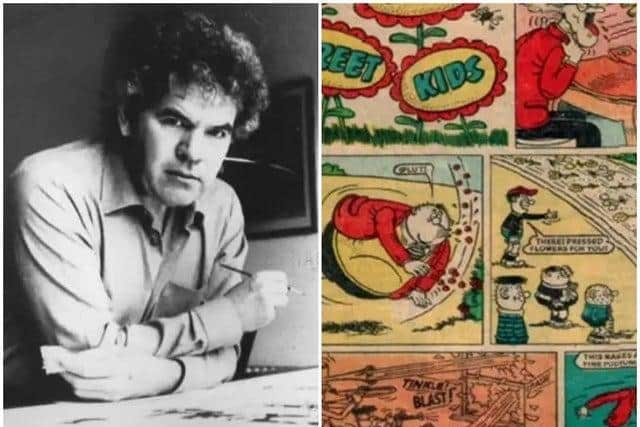
Cartoonist Leo Baxendale, who honed his skills at the Lancashire Post, created Minnie the Minx and the Bash Street Kids, who have delighted youngsters for generations and feature in a special anniversary edition of The Beano to mark Dennis’ birthday.

Leo’s life
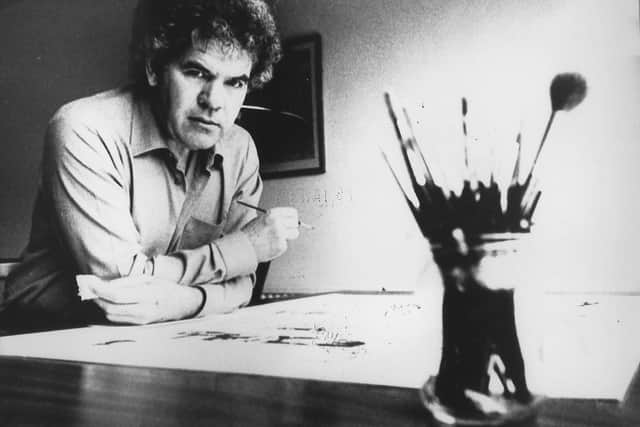
Born in 1930 in Whittle-le-Woods and educated at Preston Catholic College, Baxendale served in the RAF before deciding he wanted to be an artist, where he took his first job at Lancashire Evening Post, drawing adverts and cartoons.
His major break came in 1952 when he began freelance work on The Beano for Dundee-based publishers D.C. Thomson & Co, creating Little Plum. His bear characters became so popular he was asked to create a strip just for them and The Three Bears began. He was then asked to come up with a female equivalent of Dennis the Menace, and he unleashed the naughty and ever-so-popular Minnie the Minx.
In 1954 Baxendale began work on When the Bell Rings about an army of unruly school children, which later became The Bash Street Kids. He was also a key part in the launch of The Beezer in 1956 and worked on the new Wham! (Odhams Press) in 1964.
He left after 10 years and he did work on Clever Dick and Sweeny Toddler through Fleetway (IPC Magazines).
Minnie
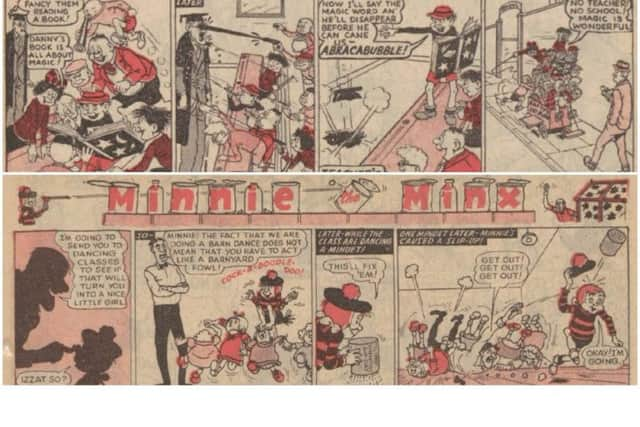
Minnie The Minx first appeared in issue 596, dated December 19, 1953, making her the third longest running Beano character behind Dennis the Menace and Roger the Dodger. She would later be drawn by Jim Petrie, Tom Paterson, Ken Harrison and Laura Howell. She would also appear in animated films.
Minnie is depicted as a tomboy, with a real name of Hermione Makepeace. Although Minnie was created with Dennis the Menace iconography - most famously the red and black stripy jumper - Howell said Minnie was "very much her own character".
Her first strip introduced her as "wild as wild can be" and showed her exasperated mother attempting to get her to be more creative rather than fight. Taking a book, Minnie then proceeds to beat her classmates during a revenge scheme using the scrapbook as a weapon. Most of Minnie's earlier strips consisted of six-panel boxes; however, as her popularity grew, she was given her own full page with added colour. This introduced her trademark flaming red hair and red and black jersey.
Minnie also appeared alongside Dennis the Menace in his own strip in the edition of January 23,1954 of The Beano. In the strip, she swapped toys with Dennis for the day as she received his trusty catapult and he proceeded to 'menace' with her doll's pram. In the end, she got out of trouble scot free whilst Dennis had to suffer for all her minxing. It was possibly this that began their future eternal rivalry.
After comics
Baxendale, who had five children - including Martin Baxendale, who also became a cartoonist - left the world of traditional comics in 1975 and went on to create Willy the Kid through Duckworths using the hardback annual format.
In the 1980s he fought a seven-year legal battle with DC Thomson for the rights to his Beano creations, which was eventually settled out of court. His earnings from that settlement allowed Baxendale to found the publishing house Reaper Books in 1987, releasing THRRP!, an adult comic book and created I Love You Baby Basil! for The Guardian in 1990.
Baxendale was the second person inducted into the British Comic Awards Hall of Fame, in 2013. He was described as having created "a lifetime of original, anarchic, hilarious and revolutionary comics" and having had an "incalculable" influence on children and comic artists, while his work was lauded for being "an integral and inseparable part of the history of British children's comics."
Tributes
He died of cancer in 2017, aged 86, with tributes pouring in from the work of art and literature. Scottish Comic book writer Kev Saunders, who also worked on The Beano, said at the time: “He’s done more than most to leave their mark on our business. His strips are always a delight, and his designs live on in the house style of The Beano.”
Children’s books writer Danny Pearson called him “a British comics legend” and comic writer Fraser Campbell commented said: “Probably the most influential creator in British comics. He created comics and characters the entire nation adored.”
Support your Lancashire Post and become a subscriber today. Enjoy unlimited access to local news, the latest football stories and new puzzles every day. With a digital subscription, you can see fewer ads, enjoy faster load times, and get access to exclusive newsletters and content. Click here to subscribe.