
I've only just managed to buy my first home at 30... the cost of living crisis is unfair on young people

As part of National World’s campaign Project Peter Pan, which listens to young people at the brunt of the cost of living crisis at a time when getting on the property ladder is tougher than ever, read our reporter Jack Marshall’s first-hand account of buying his first house after years of saving amidst skyrocketing interest rates.
Work harder, save more, stop buying avocado on toast, cancel your Netflix subscription. If you’re a younger person, you’ll have undoubtedly heard any number of these eye roll-inducing pearls of wisdom in response to any complaints about finances you may have had the temerity to voice. ‘Life’s hard - just get on with it and stop moaning. That’s what we did back in my day.’
But, on an economic level, it is normally this hard? While the narrative that all young people are feckless layabouts addicted to expensive iced coffees and allergic to toil and parsimony is seductive, it’s a complete fallacy. As tempting an explanation as it may be, we’re not moaning because we’re a uniquely lazy generation who always want more, more, more. We’re complaining because the social contract - the quid pro quo which says ‘work hard and you’ll reap the rewards’ - is completely broken.
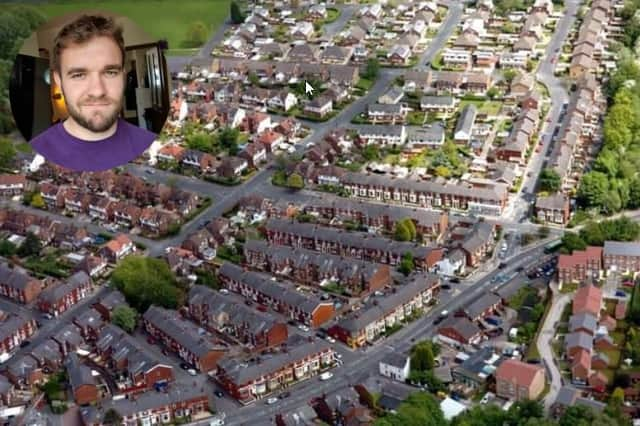

As a young Millennial born in 1994, I was slightly too young to vote when the 2010 coalition government decided to enforce crippling austerity on a population spooked by a financial crisis in 2008 caused not by benefits claimants but fat cat bankers. I wasn’t too young, however, to be part of the first cohort to have the pleasure of paying £9,000 a year for a university education before entering a tumultuous job market while vital public services were slashed to the bone.
Reassured that the shockwaves caused by the 2008 crash represented a ‘once-in-a-lifetime’ occurrence, my generation watched as more and more ‘once-in-a-lifetime’ crises shook our already-shaky foundations: Brexit, Covid, Russia’s invasion of Ukraine, and Liz Truss. The pound plummeted, interest rates soared, the cost of everything skyrocketed, and we were castigated for complaining by infinitely more comfortable generations whom we had gone into lockdown to protect from a deadly virus.
What makes it more galling is that those lecturing us seem singularly incapable of recognising their own good fortune: of being born into a nascent and well-funded NHS, of new universities with free tuition, of generous pension terms, of the cut-price fire sale of state-owned utilities to private companies devoted to shareholder dividends, and of the vast post-war council house-building boom followed by the mass giveaway of those very same houses, hamstringing the next generation desperate for affordable housing.
Is it any wonder more young people are forced to delay their ambitions of independence and live with mum and dad? Once a nation of proud property owners, we now boast some of the lowest rates of home ownership in Europe. With 11m people in the UK renting privately, the price-gouging has kicked in with force: since 2010, the cost of renting has gone up by 44.5%, during which time wages have risen by 30.4% and inflation has risen by 24%.
I consider myself extremely fortunate to have been able to buy a home at the age of 30, and even then I was only able to claw my fingernails onto the first rung of the property ladder by dint of my being in a relationship, ensuring combined savings. Due to astronomical house prices - in 1996, the average house price was about £53,000, now it's £282,000 - to be single in this country is to be almost entirely locked out of the property market, unless you can access funds from the bank of mum and dad.
For those who managed to overcome the odds and scrape together a 10% deposit which could almost have bought a house outright in decades gone by, our reward has been eye-watering interest rates on mortgages for hundreds of thousands of pounds more than our grandparents’ cohort. Robbed of a healthy public sector and a more reliable job market, saddled with student debt and handicapped by Brexit, we kept going, only to be kicked once more by the Truss-Kwarteng mini-budget.
I’m not going to lie, it’s very frustrating. We don’t want special treatment; my generation doesn’t want anything different to what we grew up seeing our parents enjoy - namely, an affordable family home, a reasonably-paying job, and the odd holiday. But it’s hard not to feel like we’ve been made to play the game on hard mode whilst being barracked and branded as whingers by those who breezed through on easy.