
Major update on when a life-saving stroke treatment will finally be available 24/7 in Lancashire
A potentially life-saving stroke treatment will be on offer around the clock in Lancashire and South Cumbria by early next year at the latest, it has emerged.
The Royal Preston Hospital already offers the procedure, known as a thrombectomy, to suitable patients in the region – but it is currently available only during limited hours.
An ambition to roll out a 24-hour service by last autumn went unfulfilled, because of difficulties recruiting the staff needed to increase the operating times of the specialist facility beyond 8am-6pm.
However, a meeting of the NHS Lancashire and South Cumbria Integrated Care Board (ICB) heard that the treatment – which can also preserve more of a stroke sufferer’s mobility – will be offered at any time of day or night from no later than 1st February, 2026.
Lancashire Teaching Hospitals NHS Foundation Trust (LTH) – which runs the Royal Preston – is also being lobbied by the ICB to bring that date forward, so that thrombectomies are available 24 hours a day by as soon as 1st October.
Dr. Andy Knox, the ICB’s acting medical director, said he had “made it really clear” to LTH that “we would like it to be ready to go [from that date]”.
“We know that things will be in place by 1st February,” he added.
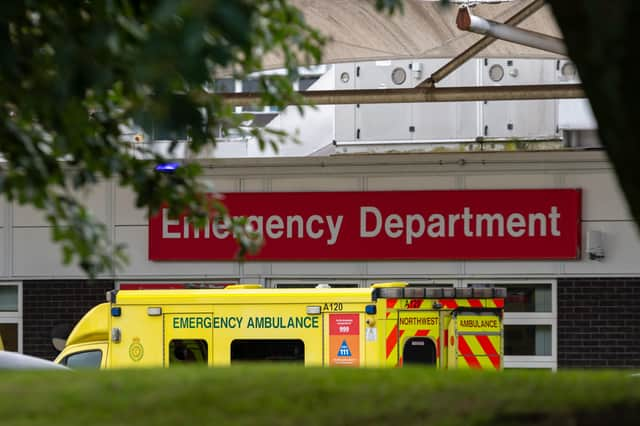

Dr. Knox said that the more ambitious timeframe was supported by NHS England’s strategic commissioning team, but that they recognised “the pressure on the trust”.
Thrombectomy is used to treat only those strokes caused by a blood clot in a large artery in the brain. The procedure involves surgically removing that clot – but it has to be carried out soon after a stroke occurs in order to be successful.
A coroner recently said the lack of an out-of-hours thrombectomy service in Lancashire and South Cumbria posed a life-threatening risk to patients.
Christopher Long issued the warning at the inquest earlier this year into the death of Michelle Mason. The 45-year-old died at the Royal Lancaster Infirmary in June 2024 after suffering a stroke for which thrombectomy treatment was “considered”.
That would have required Ms. Mason to be transferred to the Royal Preston, but the coroner noted that the operation was not available “locally” at the time she needed it. He issued a ‘prevention of future deaths’ report, calling for action.
However, as the Local Democracy Reporting Service (LDRS) has charted, a phased plan for the introduction of a 24-hour thrombectomy service at the Royal Preston has been on the table since 2022.
Two milestones were set – the expansion of what was then a weekday-only daytime service to include weekends by September 2023. That target was achieved, although LTH acknowledged last year that the weekend offer remained contingent on the availability of staff at the weekend.
However, the aspiration to have a 24-hour facility in operation by September 2024 was not met, because the necessary staff could not be found to deliver it.
Dr. Knox told the ICB meeting that the interventional radiologists required “to be able to fulfil the rota requirements” had now been recruited, but that a new consultant was going to take “a little bit of time to move posts and come into LTH”.
He added that co-operation had improved with other trusts within the wider North West region, with the aim of transferring Lancashire and South Cumbria patients for treatment elsewhere if they needed a thrombectomy when the Royal Preston service was shut.
Dr. Knox said that that arrangement – with the Northern Care Alliance in Manchester and the Walton Centre in Liverpool – “hasn’t always worked, because those centres have also been under pressure”.
Craig Harris, the ICB’s chief operating officer, stressed that the thrombectomy service at LTH operates to a high standard when it is open, seeing “a significant[ly] larger number” of patients during its operating times than other trusts. The meeting also heard that the North West was the second-best performing region outside of London for thrombectomy delivery.
The LDRS approached Lancashire Teaching Hospitals for comment on the issues raised during the ICB discussion.