
Coronavirus testing now available for essential key workers in Lancashire
Essential key workers and their families can now book a test if they are showing symptoms of coronavirus.
If you are an key worker who is self-isolating, you can now apply for you and your household to get tested for coronavirus (COVID-19).


The tests are currently limited to 'essential' key workers who are showing symptoms, as well as anyone in their household.
The new testing process is in addition to that already provided for NHS staff at Preston's College in Fulwood.
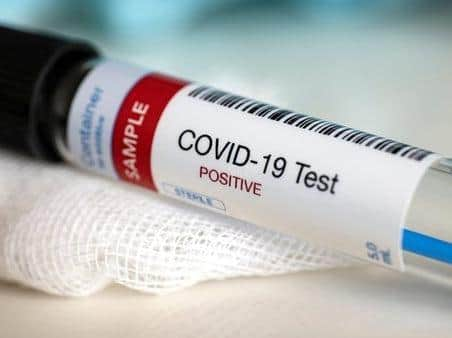
Examples of essential workers include teachers, social workers, transport workers, police officers, firefighters, journalists and prison staff.
A full list of essential workers and those prioritised for testing can be found at the bottom of this report.
It means essential workers can find out whether they have the virus, and can help them return to work if they test negative. Testing is most effective within 3 days of symptoms developing.
If your test result turns out to be negative, you can safely return to work, as long as:
- you are well enough
- you have not had a high temperature for 48 hours
- anyone you live with also tests negative
If your test result is positive, or someone you live with tests positive, you cannot return to work and you will need to continue to self-isolate.
Those eligible can choose between visiting a drive-through test centre or requesting a home test kit.
Dr Sakthi Karunanithi, director of public health for Lancashire, said: "We know that this situation is a difficult time for people. Through testing we can understand more about the scale of this situation and help us to bring normal life back again, once it's appropriate to do so.
"By making key workers in the county aware of the testing facilities, it will help us to keep vital services running at this time and protect the key workers themselves."
The Lancashire Resilience Forum, a coalition of agencies including the police, fire, local authorities and health services, said it is working closely with partner organisations to create additional mobile and satellite testing sites in the county.
Key workers are asked to remain patient while trying to book a test, as the website has been busy at certain times.
You can find out more and book a key worker test here.
List of essential workers and those prioritised for testing (England only)
- all NHS and social care staff, including:
doctors, nurses, midwives, paramedics, social workers, care workers, and other frontline health and social care staff including volunteers
- the support and specialist staff required to maintain the UK’s health and social care sector
- those working as part of the health and social care supply chain, including producers and distributors of medicines, and medical and personal protective equipment
- NHS Blood and Transplant frontline staff (blood donation staff, specialist nurses for organ donation, staff running therapeutic apheresis services in NHS hospitals)
- those providing ancillary support to NHS workers (such as hotel accommodation for NHS staff)
essential public services staff, including:
- prisons, probation, courts and tribunals staff, judiciary
- religious staff
- charities and workers delivering critical frontline services
- those responsible for the management of the deceased
- journalists and broadcasters covering coronavirus or providing public service broadcasting
- public health and environmental staff, such as specialist community public health nursing
- public safety and national security staff, including:
- police and support staff
- Ministry of Defence civilians, contractors and armed forces personnel (those critical to the delivery of critical defence and national security outputs and critical to the response to the coronavirus pandemic), including defence medical staff
- fire and rescue service employees (including support staff),
- National Crime Agency staff, those maintaining border security, prison and probation staff and other national security roles, including those overseas
- British Transport Police and the Maritime and Coastguard Agency
transport workers, including:
- those who keep the air, water, road and rail passenger and freight transport modes operating during the coronavirus response
- those working on transport systems through which supply chains pass
education and childcare workers, including:
- support and teaching staff
- social workers
- specialist education professionals
critical personnel in the production and distribution of food, drink and essential goods, including:
- those involved in food production, processing, distribution, sale and delivery
- those critical to the provision of other essential goods, such as medical supply chain and distribution workers, including community pharmacy and testing (such as PHE labs), and veterinary medicine
- workers critical to the continuity of essential movement of goods
- local and national government staff critical to the effective delivery of the coronavirus response, or delivering essential public services, such as the payment of benefits
- public and environmental health staff, including in government agencies and arm’s length bodies
- funeral industry workers
frontline local authority staff and volunteers, including:
- those working with vulnerable children and adults, victims of domestic abuse, and the homeless and rough sleepers (and hotel staff supporting these groups)
- voluntary sector organisations providing substance misuse treatment
utilities, communication and financial services staff, including:
- staff needed for essential financial services provision (including but not limited to workers in banks, building societies and financial market infrastructure)
- the oil, gas, electricity and water sectors (including sewerage)
- information technology and data infrastructure sector and primary industry supplies to continue during the coronavirus response
- essential staff working in the civil nuclear, chemicals, telecommunications (including but not limited to network operations, field engineering, call centre staff, IT and data infrastructure, 999 and 111 essential services), postal services and delivery, payments providers and waste disposal sectors