
Cancer patients in Preston will be some of the first to benefit from a new LED technology boost

The introduction of PBM therapy will hugely benefit a significant number of patients who were having their quality of life seriously diminished by really miserable, painful symptoms.
More than 660 head and neck cancer patients in Preston will be some of the first in the country to benefit from an LED technology boost to counteract a painful side effect of treatment.
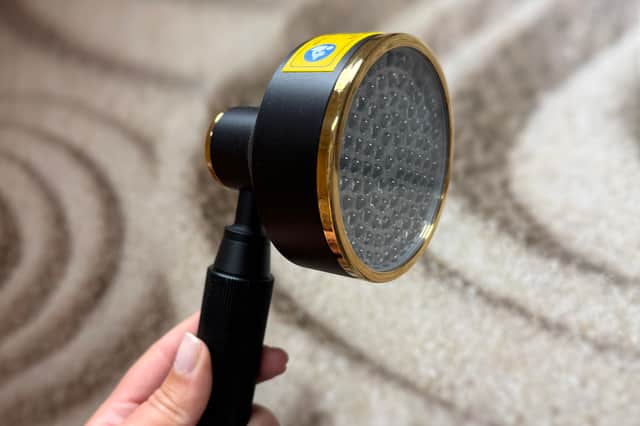
Use of an LED “showerhead”, which is only the second piece of equipment of its kind in the whole of the North West , is now being offered to all head and neck cancer patients at Rosemere Cancer Centre at the Royal Preston Hospital. It’s been funded by the Rosemere Cancer Foundation to prevent and treat oral mucositis (OM), a painfully debilitating and potentially serious complication of treatment.
Chemoradiotherapy (CRT, chemotherapy and radiotherapy at the same time) leads to OM in almost all patients, which often gets worse as their treatment progresses. With its symptoms of mouth ulcers, sores that can bleed, pain, swelling and throat soreness, it can, in the most severe of cases, even cause treatment to be interrupted.
Photobiomodulation (PBM) therapy, which is recommended by NICE (the National Institute for Health and Care Excellence) for its proven benefits uses low level lasers or LEDs with near infrared light to painlessly target the damaged tissue inside the mouth and neck. It stimulates tissue repair to reduce ulcers, sores and inflammation, easing pain.
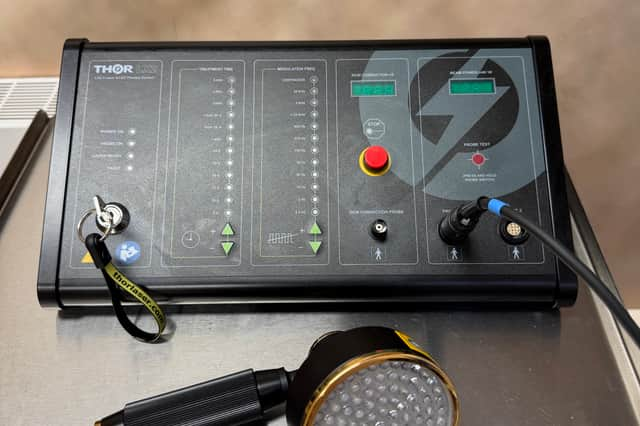

Consultant radiographer Lucy Koh and advanced clinical practitioner Rachel Rigby applied to Rosemere Cancer Foundation for the £18,145 needed to buy the PBM unit and a year’s worth of disposal “showerhead” (probe) covers. H
Lucy explained: “PBM therapy is proven to reduce OM symptoms and improve quality of life where historically, there has been no effective treatment. It has no contra-indications or known side-effects and is so easy to deliver that patients, once shown, can administer it themselves at the beginning or end of their treatment appointment.”
Rachel continued: “It only takes about five minutes. There is currently one probe or “showerhead” attached to the PBM unit, which is placed externally against the cheek and lips.
“We estimate around 664 patients a year will now benefit from PBM therapy. We have allocated a clinic room to permanently house the unit with patients able to access the machine independently once given initial training on how to use.”
Rachel added: “In the longer term, the aim is to make the machine available to patients using our late effects of radiotherapy disease clinic. We also believe the provision of PBM therapy will deliver cost savings to the trust by reducing the cost of pain management and invasive forms of nutritional support as well as hospital admissions due to OM infections and treatment interruptions.”
Dan Hill, chief officer of Rosemere Cancer Foundation and head of charities for Lancashire Teaching Hospitals NHS Foundation Trust, said: “We are genuinely excited to be able to fund this project. The introduction of PBM therapy will hugely benefit a significant number of patients, who were having their quality of life seriously diminished by the really miserable, painful symptoms of OM.
“As always, our thanks to our fantastic supporters, who have helped us raise the funds for this very important piece of equipment and enabled Rosemere Cancer Centre to become just the second centre to The Christie in the whole of the North-West to offer PBM therapy, which other cancer centres and hospitals nationwide are still working to roll-out in accordance with NICE guidelines.”
Head and neck cancer is relatively common – it is the 7th most common cancer in the UK.
- Rosemere Cancer Foundation works to bring world class cancer treatments and services to cancer patients from throughout Lancashire and South Cumbria being treated not only at Rosemere Cancer Centre but also at another eight local hospital cancer units across the two counties. The charity funds the latest in cutting-edge equipment such the PBM therapy unit, clinical research, staff training and innovative services and initiatives that the NHS cannot afford in order to make patients’ cancer journey more effective, comfortable and stress-free.