
"The misogyny we are seeing from some boys is frightening" say teachers

“The misogyny we are seeing from some boys is frightening.” Teachers in Lancashire and across the UK say harmful and extreme online content is now a common part of pupils’ lives through social media
In the latest survey of National Education Union members, conducted ahead of Annual Conference in Brighton, 10,578 teacher members and 3,230 support staff members in English state schools gave us their assessment of how harmful and extreme online content is now a common part of pupils’ lives through social media.
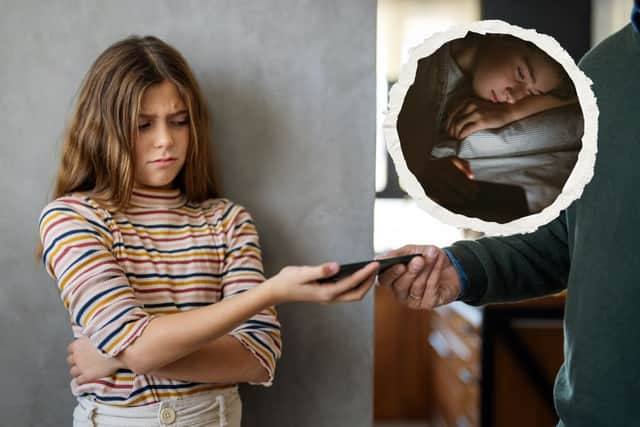

According to teachers, the influence of extreme online content and personalities is leading to behaviours that are racist, misogynistic , and homophobic or transphobic. For teachers, social media is widely perceived to be linked to loss of concentration, mental health impacts and sleep deprivation among their pupils.
Secondary school teachers report higher exposure and stronger impacts across the board. For example, teachers in those settings are more than twice as likely to see misogynistic behaviours than in primary and 23 per cent have themselves experienced it in the form of verbal abuse.
Open comments show that persistent online bullying is spilling into the school environment, as are safeguarding risks linked to sexualised content. 98 per cent of teachers express support for stricter government regulation of tech firms to protect children from addictive algorithms, as do 94 per cent of support staff.
The NEU-led Big Tech's Little Victims campaign is calling for government to raise the age for social media access to 16, and to do more to regulate and hold tech firms to account for protecting children from harmful online content.
Speaking to members from across education phases, research found the negative effects of social media on young people are now pervasive.
“Children measuring their worth in likes and followers. It is damaging their self-esteem”
“Girls comparing themselves to filtered images and influencers, leading to anxiety and not eating”
“Racist and homophobic language learned online is becoming normalised in school”
“Parents say they cannot control their child's phone use, but we are left to pick up the pieces”
Teacher assault is also an issue across the board. Misogyny is the most common form of verbal assault experienced by teachers (16 per cent of all teachers; 19 per cent of women teachers). Almost a quarter of all secondary teachers and around 29 per cent of all those in special schools and PRUs said they had experienced misogyny. Although sexualised comments were experienced by 9 per cent of teacher respondents overall, this jumps sharply to 19 per cent in secondary schools. In primary schools it is three per cent.
"The misogyny we are seeing from some boys is frightening. It is clearly influenced by what they are watching online."
Some four per cent of teachers reported racist verbal assaults in the last year, but this varied significantly by ethnicity. Among Black teachers, around one in seven reported being racially abused by pupils in the past 12 months, compared to three per cent of white teachers.
Results for support staff are broadly similar to teachers, with 60 per cent experiencing verbal assaults in the past year. This is consistent across the board, peaking in special schoolsbut evenly between primary and secondary. However, misogynistic remarks were directed at a fifth of all support staff respondents working in secondary.
Two thirds of teachers report seeing a loss of pupils’ concentration as a result of social media use . Two thirds report social media causing both mental ill-health and sleep deprivation. A majority report incidents of bullying and harassment as a result of social media use, as well as widespread discriminatory attitudes and behaviours.
“Bullying no longer stops at the school gate. It is relentless and follows them home."
“Constant fallouts from group chats that begin at home and explode in school the next morning."
“Friendship groups are breaking down because of online gossip and rumours spreading rapidly."
“Online comments and messages often escalate quickly, creating serious safeguarding concerns for staff."
"We are dealing with increasing incidents of children sharing explicit images and then being blackmailed."
Secondary teachers are most likely to report such impacts, but the differences when compared to primary are not always so stark. For instance, sleep deprivation is a major impact according to primary teachers. Two thirds also said loss of concentration is an effect of social media use; this view rises to three quarters among secondary teachers. Mental health issues, however, are witnessed more often by secondary teachers ) than primary.
One teacher said: "There is a clear link between heavy social media use and declining attention spans in lessons.
"Children are exhausted because they are online until the early hours. They cannot concentrate and behaviour deteriorates."
Far from being a polarised debate, teachers have a clear and emphatic view of Big Tech – borne from years of tackling its effects in real life. A neutral response averages just two per cent for teachers across categories, and negative just one per cent.
Commenting on the findings of the survey, Daniel Kebede, general secretary of the National Education Union, said: "Addictive social media algorithms are feeding our children harmful content on a daily basis. That content is having clear negative effects - with educators reporting racist and misogynistic behaviour by young people, influenced by what they have seen online.
"Other impacts reported by our members - on students' mental health, personal development, and learning - are deeply concerning.
"This is not a problem that schools or parents on their own can fix. The vast majority of teachers and support staff back stricter regulation of tech firms to protect young people. That is why we are calling for government to raise the age of social media access from 13 to 16.
"Ministers must not delay action to rein in tech giants - who profit from every click - and hold them accountable for the harms they cause. Each day that we continue in the present situation comes with a cost, whether it is bullying, worsening mental ill-health, eating disorders, or disengagement from learning. We cannot allow this generation or any other to become victims of big tech profit margins."