
Blackpool mum supports Teenage Cancer Trust "Through Cancer Together” campaign
A mum from Blackpool is backing a Teenage Cancer Trust campaign highlighting the importance of support for family and friends when a loved one has cancer.
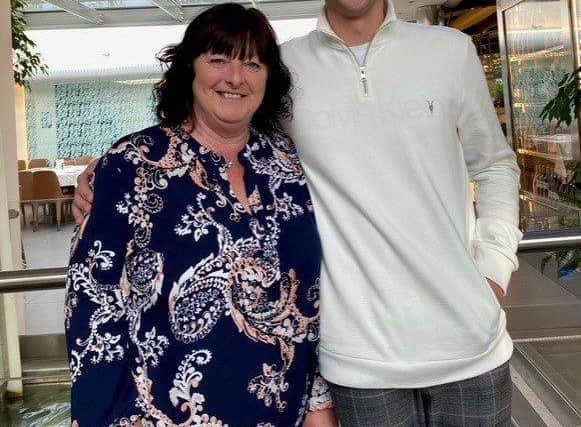
Sue Groves, 65, is supporting the charity’s “Through Cancer Together” campaign after her son Harry was diagnosed with stage 4 Hodgkin lymphoma the day after his 21st birthday. Teenage Cancer Trust says that supporting family and loved ones is an essential part of supporting a young person through cancer because it’s family and friends, as much as the individuals, who get through cancer - together. Sue said: “When Harry was diagnosed my whole world started spinning. I just wanted to get off. “I don’t mean to sound selfish as Harry was the one who was going to suffer the most but, as any parent will tell you, hearing something like this is happening to your child is the most painful and devastating experience. You want to take away what’s happening from them a million times over. “As his mum, I took it particularly badly but couldn’t let Harry see that. I had to be strong for him, so all my crying was done behind closed doors.” Sue first noticed something was wrong with Harry after a few people mentioned that they thought he had lost weight. She later noticed a lump on his neck. “When I spotted a lump in his neck, it stopped me in my tracks,” she said. “My niece had been diagnosed with Hodgkin lymphoma twenty years earlier after a lump was found in her neck, so I knew in my heart what it was straight away.” A biopsy at Blackpool Victoria Hospital confirmed that Harry had Hodgkin lymphoma. After he was diagnosed in 2019, Harry,25, received support from Teenage Cancer Trust - the only UK charity dedicated to providing specialised nursing care and support for 13-24 year olds with cancer. In 2022 Teenage Cancer Trust Nurses and Youth Support Coordinators supported 1,831 family members, partners and friends of young people with cancer. Sue added: “We were put in touch with Chris Lowe, Teenage Cancer Trust’s Clinical Liaison Nurse Specialist, who visited Harry regularly. She was there for the whole family at a time when we desperately needed help. “I probably needed that help more than Harry did as there is nowhere for mums to turn to through this difficult time. I don’t know what I would have done without her help. “Chris was there for me when nobody understood what I, as a mum, was going through. She gave me hope when I didn’t have any. Because Harry was diagnosed at stage 4, I felt like I should have seen something and that I had missed it. She reassured me that it wasn’t my fault.” Harry had six months of chemotherapy and he experienced side effects including hair loss and severe sickness, tiredness and loss of appetite. “The side effects from the chemo were pretty tough,” Sue added. “I can’t put into words how bad it was having to see my child go through it. “As a mother, I would have taken that pain away from him in a heartbeat. “When I was feeling low, Chris was there for me to talk to, and she was always there to answer my questions.” Harry still had three chemo treatments left when the Coronavirus pandemic hit in 2020 and due to hospital visiting restrictions, Sue couldn’t go to his treatment with him. “It was awful having to drop him off and watch him walk away by himself,” she said. “He was stoic about the fact that he had to go by himself because it was one of those things that couldn’t be avoided, but deep down I knew he wouldn’t particularly like it. “I’d been with him throughout his treatment and supported him and we were so close to the end. I was sad I couldn’t see it through with him.” Harry, now 25, finished chemotherapy in April 2020 but he was unable to ring the bell to signify finishing his treatment due to Covid. Harry is now in remission and is enjoying his job working a primary school teacher. Sue is now retired. Sue said: “I’ll never stop worrying about Harry. It’s really important that loved ones can access support from someone like Chris because you can’t handle everything on your own. I needed to offload and get additional support. It wasn’t the same as speaking to family and friends because they would never completely understand. Speaking to Chris felt like having a shoulder to cry on.” Tips for supporting a loved one from Sue:
- Book recommendation: “Take my Hand” by Kerry Fisher and Pat Sowa. A story about two best friends, two sons fighting for their lives, one true story about motherhood, grief and hope,
- Talk to someone: Talk to aprofessional and get the support, whether that’s speaking to a cancer nurse/ the nurses who are supporting your loved one. Ask them to find out what charities are available to help support you and which other resources you might be able to access.
For more tips and advice for supporting a loved one with cancer visit: www.teenagecancertrust.org/information-about-cancer/how-support-someone-cancer Why is supporting loved ones so important?

- Finding out that a loved one aged 13–24 has cancer is a huge shock and can turn a family or partner’s life upside down. It can leave you battling with a lot of different emotions and it can be hard to know how to respond. Often the most helpful thing – for you and them – is simply to be there when you’re needed, but it’s also important to look after yourself at such a difficult time.
- Emotional support from families, partners and friends is crucial to getting young people through cancer – so building a family’s capacity to provide that support is a key way that our nurses and youth workers support young people.
- Worrying about the strain on their family is a major cause of anxiety for young people with cancer. Young people often try to shield their parents, partners and siblings from the impact of their illness by being ‘strong’, which can mean they mask their own needs and can add to the psychological and emotional burden they are already carrying.
- While families are a vital source of support, they can also be challenging! At a time when young people may be feeling a loss of independence and identity, we can help to mediate with families to negotiate a space around the young person to ensure they feel in control of their lives and their treatment.
Fact box: How does Teenage Cancer Trust support loved ones?
- Emotional and psychological support. Much of our support comes in the form of supportive conversations and listening, whether in one-to-one meetings in hospitals, at home, or online/by phone,
- Social interaction and peer support. We provide loved ones with opportunities to connect, interact and support each other. This includes mums’ and dads’ support groups, social/peer events such as monthly lunches or coffee mornings, and memorial days,
- Supportive environments. Teenage Cancer Trust funds units in NHS hospitals, designed to provide an open, welcoming environment for families and partners. They are places where family members can stay over, prepare meals, and meet others going through the same thing,
- Referrals. We refer family members to other charities and support services for more specialised support, for example for assistance with financial hardship or psychological support,
- Practical support. We’re there to help with the range of practical challenges that may come with supporting a loved one through cancer - from negotiating time off work with employers, to dealing with the practical aspects of end-of-life care,
- Information and education. We provide information and guidance for families and partners of young people with cancer, in person and via our website.