
'We're a one-stop shop' - Lancashire County Cricket Club boss talks IPL, Old Trafford, and £36m revenues

Revenues at Lancashire County Cricket Club have increased fourfold since 2012 but, despite this, chief executive Daniel Gidney is unequivocal. "Domestic cricket doesn’t make any money,” he says. “[We knew] if we wanted to fund domestic cricket, we needed other revenue streams."
When Gidney joined as chief executive in 2012, the group was generating around £9m in turnover. The club had just come out of a period of having lost international hosting status, which meant it had lost money four years in a row.

Cash flow was limited during the winter, meaning it had to generate enough income in the summer cricket season to cover costs through the colder months.
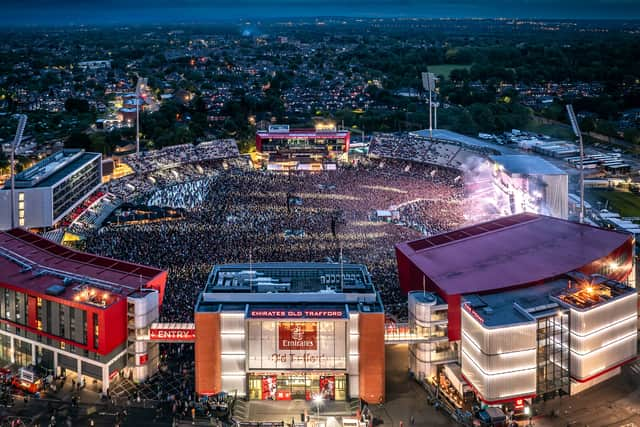
Over 13 years, revenue has risen to £36m, driven by developments including The Point, a major conferencing and events space, and the on-site Hilton Garden Inn — both of which have diversified the business and helped establish it as a unique venue in the market.
The most significant growth has come from the conferencing and events operation, which has expanded from a couple of million to a combined hotel and C&E business now generating around £13–14m on its own.
This surge in revenue has positioned the organisation as a strong investment opportunity, helping to attract RPSG, who have acquired a 70 per cent stake in Manchester Originals.
Gidney also reflects on the journey that transformed the group, outlines his vision for its next chapter, and shares how he plans to end the ten-year trophy drought for England’s men’s cricket team.
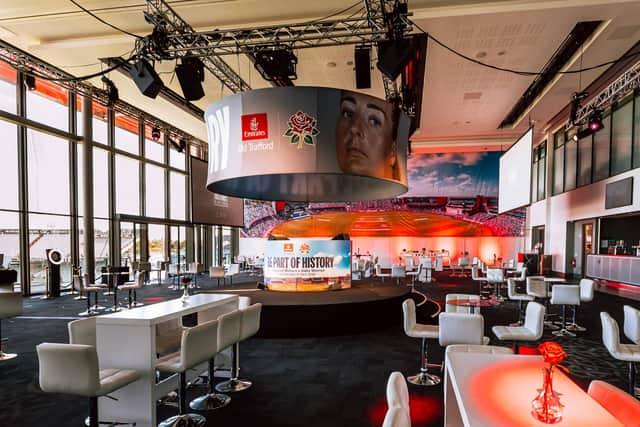
"A lot of people raised their eyebrows when they saw this massive building that takes a thousand people, column-free, with natural lighting", he said on The Point. “It was a ground-breaking decision. There are only two or three places like that in the UK. It’s been a real engine room of the club’s commercial growth over the past 15 years.
"Without it, the club would’ve had some significant challenges financially, and it pivoted the club to enable it to grow its revenue base. One of the big things here was that we are a cricket club and we’ve hosted international cricket for over a hundred years.
“But if for any reason we didn’t have a Test match, then historically we would’ve always lost money. It was about developing multi-cyclical revenue streams that were 365 days a year."
Another crucial development was the construction of The Hilton Garden Inn. The first 150-bedroom hotel block opened in 2017 and within two years the organisation was ahead of its business plan and able to refinance. The group went on to develop a second hotel block, increasing the capacity to 250 bedrooms and opening in autumn 2023.
"A lot of people thought that we built the hotels just for hospitality at cricket matches, but it would never have passed a demand analysis or ROI examination," Gidney explained. "It was always about enabling us to grow our conferencing business. The cricket hospitality and concert side was the icing on the cake.
"You’ve got Monday night [Premier League] fixtures where pretty much every hotel room in Manchester is full, and then we have domestic and international cricket matches and concerts. We also have our core conferencing business, so we effectively have business that feeds the hotel seven days a week.
"Once you put the 250-bedroom hotel with a thousand-delegate conference facility together, that’s a sweet spot. It's quite rare and it's great for organisers because you're a one-stop shop."
Two years ago, during a Sri Lanka Test match, the on-site hotel achieved a milestone by generating more income on its own than international cricket. Gidney says it marked a significant cultural moment for the organisation, given that international cricket has long been part of its DNA.
That growing commercial strength and financial resilience made Manchester Originals — a professional cricket franchise in The Hundred, representing Lancashire and based at Emirates Old Trafford — an increasingly attractive prospect for investors, leading to the landmark deal with RPSG, which acquired a 70 per cent stake in the club.
Highlighting the importance of the deal, Gidney said: "We’ve been a community benefit society with no shareholders, so we don’t have equity injections. Everything we’ve funded has been through debt or grants.
"Cricket hasn’t really been investible because we’re owned by 10,000 members, making it harder to bring in private investment. Five years ago, the governing body developed The Hundred, a short-format tournament with eight teams, including Manchester Originals, all owned by the governing body.
"The chief executive and chair of the ECB changed two or three years ago and recognised the opportunity to bring in private investment. Manchester Originals Limited was a perfect investment vehicle.
"After 2019, with the success of the World Cup and India and Pakistan visiting, we recognised India’s 1.4 billion cricket fans. When we go on tour there, Lancashire Cricket Club is more famous in Mumbai than in Manchester.
"So, we specifically wanted an Indian Premier League team. Over a couple of years, we developed relationships with key players in India. RPSG were our favourite from the start. We felt they had the resources — a multi-billion-pound organisation — and genuinely wanted to partner with us."
That investment has also extended into women’s cricket, where Lancashire has been a leading force in driving professionalism and equality of opportunity. Since the first semi-professional season of the Kia Super League in 2016, the women’s programme at Emirates Old Trafford has grown dramatically, now boasting 21 full-time contracted players.
Lancashire became the first club to take its women’s team on pre-season tours to Dubai and India — mirroring the men’s schedule — and even converted the men’s away dressing room into a dedicated women’s home space, also a first in county cricket.
Gidney said: "We’ve invested financially and in human resources to make our women’s programme feel as loved as the men’s. In the first year as pros, the team won the double. Sponsors are now queuing up to talk to us about the women’s team."
Gidney says the success of the women’s team has shown what investment and support can achieve. The focus now, he adds, is on the men’s side, which last won a trophy ten years ago. For him, success means driving the men’s team forward and returning to winning ways. We now have an opportunity to pivot and invest more in cricket than we've been able to historically.
"We've been very successful in terms of number of games won, but [not] in terms of actually getting over the line and winning titles. That's an area I want to see us move to, but also [to be] world leading in terms of sports science, analytics, training and preparation, and what we can learn from other sports. That can be a real point of difference for us going forward."
He added: "People think it's all about investment with star players, but what I've learned from other sports is it's the training and preparation and high performance facilities outside of match day.
"With the Farington £20m complex coming on stream in 2026 and with investment in our cricket centre on site, those two investments alone will effectively act as a virtual circle to attract the best players to want to come here.
"We already have the best medical team in the country, so we have the best facilities there. We have an amazing international ground. We have an amazing pathway, but if we can actually take that next step and bring those high performance cricket facilities online, that will be the last piece of the jigsaw for me."