
"Betrayal" of BAE workers at Warton as final assembly of Typhoon fighter jets ends

Hundreds of BAE workers in Lancashire have had to be transferred to other factories or to RAF bases as production lines for the Typhoon fighter grind to halt.
Unite, Britain's leading union in the defence and aerospace sectors, has issued a scathing criticism of the UK government after it ceased investment in Typhoons, with no further orders planned.
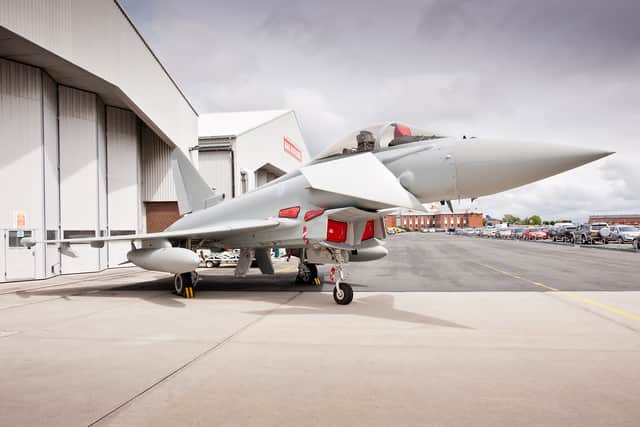

The union says hundreds of workers at the Warton site, employed by BAE Systems, have had to be transferred to other BAE factories or to RAF bases as there are no further domestic or export orders for the Typhoon.
Unite said it has long campaigned for the government to place a new order for a fourth tranche of the Typhoon. The programme formerly supported more than 21,000 highly skilled UK jobs and generated around £1.6bn annually for the UK economy.
Last month, the union warned around 20,000 jobs were at risk if the UK government fails to adequately invest in BAE’s next-generation Typhoon programme.
Concern for the future of the UK’s fighter plane fleet was raised after it was revealed Prime Minister Keir Starmer will commit to buying a dozen F-35A fighters, primarily built in the US.
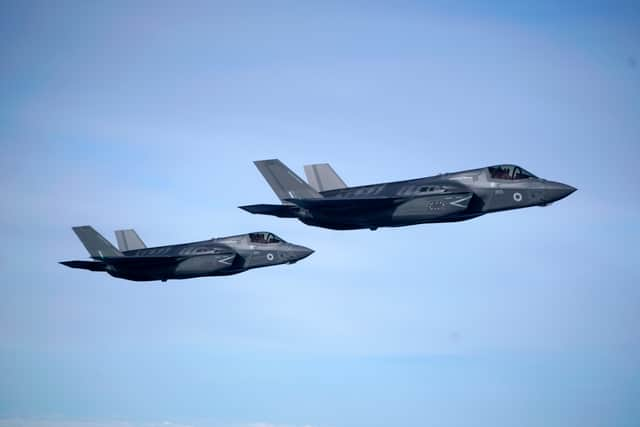
The F-35 stealth jets can carry nuclear warheads and Sir Keir said this will give the Royal Air Force the ability to launch a nuclear strike for the first time since the 1990s. The deal was made after the Prime Minister and his European and Canadian counterparts scrambled to convince President Trump they are serious about bolstering their ability to defend Europe, instead of an “over-reliance” on the US.
The UK’s existing Typhoon fighter plane fleet is aging and needs urgent replacement and Unite has argued this should be with the latest version of the British-built Typhoon by BAE Systems, not F-35s.
It says a purchase of new Typhoon’s would protect around 20,000 highly skilled, well paid defence jobs, primarily at BAE in Warton.

Unite general secretary Sharon Graham said: “Workers at BAE and across the whole UK defence and manufacturing industry will be looking at the ending of the Typhoon final assembly production at Warton and asking how a government promising to turn defence spending into ‘British growth, British jobs, British skills, British innovation’ could let it happen.
"I have repeatedly told government ministers how much is at risk in terms of jobs, skills, and national security if we stop assembling our own fighter planes.
“But instead of future planning and ensuring skilled workers are ready to produce the next generation of fighter jets [GCAP], they still seem content to sit on their hands while those skills begin to wither and die.
"The MoD must now urgently announce its commitment to the Typhoon with an order for the latest, cutting-edge T5 Typhoons to replace the aging RAF fighters being retired.
“A failure to do this could destroy a generation of aerospace workers and would amount to an act of national self-harm."

GCAP, a sixth generation stealth fighter jet being jointly made by the UK, Italy and Japan is due to have substantial volumes made in the UK. But with workers being moved away from the Warton production site, Unite says vital skills could be lost as many choose not to relocate.
Unite’s national officer for aerospace, Rhys McCarthy, added: "The government has suggested that export orders could fill the gap until GCAP but none have been forthcoming. This is hardly surprising since the government doesn't have enough faith in the plane to buy it itself yet expects foreign countries to.
"This is an act of self-sabotage that will wreak havoc with the aerospace workforce across Lancashire and a UK wide supply chain that supports thousands of jobs. The government needs to place an order for new Typhoons yesterday."

What does BAE say?
A BAE Systems spokesperson said: “We’re experienced at responding to the changing demands of the Typhoon programme to ensure we retain our specialist skills.
“The strong level of interest, commitment and investment in the aircraft from current and potential customers gives us confidence that Typhoon production in the UK will take us into the next decade - we’re working hard to secure these orders which are critical to secure the UK’s long-term sovereign combat air capability.”
Manufacturing of major units for the Typhoon are ongoing at BAE’s Samlesbury site, which includes the aircraft’s front fuselage, spine tank and tail section.
Its understood the Samlesbury production facility continues to fulfil orders from Spain (45 aircraft), Germany (38 aircraft), and Italy (up to 24 aircraft). Any future export orders for Typhoon would see further work for the Samlesbury site, and could also see additional final assembly work undertaken at Warton.